


By Blessing Fali
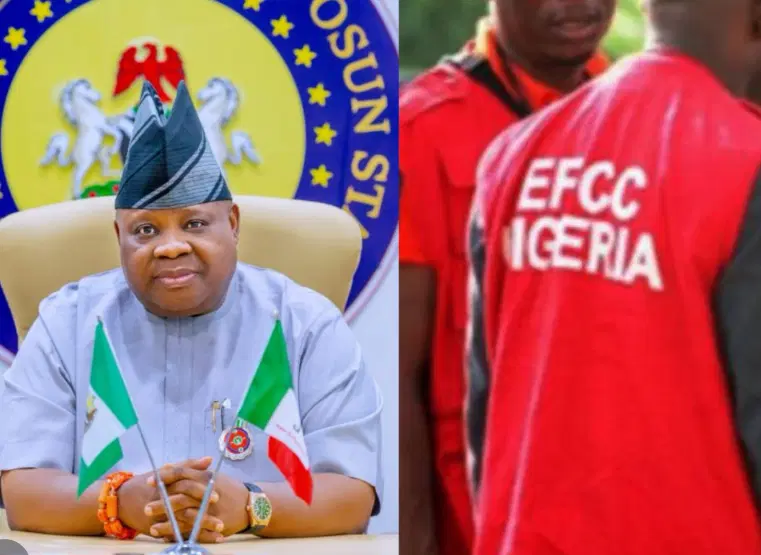
The decision by the Economic and Financial Crimes Commission (EFCC) to freeze the Osun State Government’s account has sparked widespread criticism, with stakeholders describing the move as a threat to constitutional governance and the financial independence of states.
The anti graft agency reportedly obtained a court order to restrict access to some accounts belonging to the state government as part of an ongoing investigation into alleged financial irregularities. The development has generated reactions from government officials, political actors and civil society groups, with many questioning the implications of the action on the administration of the state.
The Osun State Government has condemned the move, arguing that freezing its accounts could disrupt essential services, delay payment obligations and affect the implementation of government programmes. Officials maintained that state funds are meant to serve public interest and should not be subjected to restrictions that could undermine governance.
Supporters of the EFCC’s action, however, argued that public institutions must remain accountable and that financial investigations should be allowed to proceed without interference. They maintained that no government entity should be exempt from scrutiny where allegations of mismanagement or misuse of public resources arise.
Legal experts have also weighed in on the matter, with some raising concerns over the balance between anti corruption enforcement and the constitutional rights of states to manage their finances. They stressed the need for due process, transparency and respect for the rule of law in handling such cases.
The controversy comes amid renewed national discussions on the powers of anti graft agencies and the relationship between federal institutions and state governments. Analysts noted that similar disputes in the past have often generated debates over the independence of state governments and the extent of federal oversight.
The Osun account freeze has further intensified political tensions, with opposition figures accusing the EFCC of selective enforcement, while the commission insists that its actions are guided by legal procedures and its mandate to combat corruption.
As investigations continue, attention remains focused on the courts and relevant authorities to determine the legality of the EFCC’s action and its possible impact on the financial operations of Osun State.






Leave a comment