


By Benson Daniel
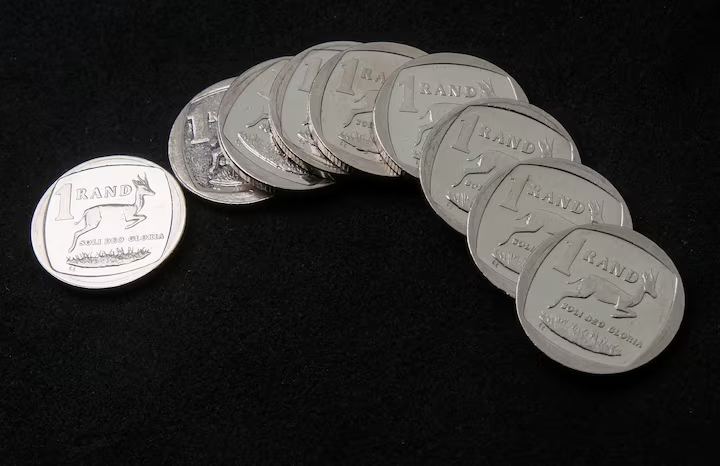
The South African rand traded within a narrow range as renewed strength in the United States dollar continued to weigh on emerging market currencies, limiting investor appetite for the South African currency despite relatively stable domestic market conditions.
Currency traders attributed the rand’s muted performance to growing demand for the dollar, driven by expectations that the US Federal Reserve could maintain higher interest rates for longer amid persistent inflation concerns and resilient economic data. A stronger dollar typically reduces the attractiveness of emerging market assets, prompting investors to shift funds toward safer investments.
The rand, which is highly sensitive to global market sentiment, has also faced pressure from uncertainty surrounding international trade, commodity prices and geopolitical developments. Analysts noted that while South Africa continues to benefit from exports of precious metals and minerals, external financial conditions remain the dominant driver of the currency’s short term direction.
Investors are closely monitoring upcoming economic data from both South Africa and the United States for fresh signals on monetary policy and growth prospects. Any indication of changes in interest rate expectations could influence capital flows and trigger further movement in the foreign exchange market.
Within South Africa, concerns over electricity supply, sluggish economic growth and fiscal pressures continue to affect investor confidence. Although the country’s financial markets have shown resilience in recent months, structural economic challenges remain a key factor influencing the outlook for the rand.
Market analysts believe the currency could regain momentum if global risk appetite improves or if the dollar weakens following softer US economic data. However, they caution that volatility is likely to persist as investors react to central bank decisions and broader global economic developments.
The performance of the rand remains significant for South Africa’s economy, as fluctuations in the exchange rate influence inflation, import costs and the competitiveness of the country’s exports. Businesses and investors are therefore expected to remain cautious until greater clarity emerges on the direction of global monetary policy.











Leave a comment