


Suva, Fiji China has test launched a long range ballistic missile carrying a dummy warhead into the Pacific Ocean, just hours after Australia signed a landmark defence agreement with Fiji, prompting concern from several countries across the Indo Pacific region.
Beijing described the launch as a routine part of its annual military training programme, insisting it was not directed at any specific country. However, the missile test drew criticism from Australia, Japan, New Zealand and other regional partners, who warned it could undermine stability in the Pacific.
Australia Raises Security Concerns
Australia’s Defence Minister Richard Marles said China had informed Canberra of the planned missile launch only hours before it took place.
Speaking at a press conference on Monday, Marles said Australia remained deeply concerned about actions that could threaten peace and security in the Pacific.
Australia’s Foreign Minister Penny Wong also described the launch as occurring amid China’s rapid military expansion and warned that it risked destabilising the region.
Australian officials stressed they do not believe the missile test was a direct response to the new Australia Fiji security agreement.
China Calls Launch Routine
China’s Foreign Ministry defended the missile launch, saying it formed part of the country’s regular military training schedule.
Foreign Ministry spokesperson Mao Ning said the exercise was conducted safely and professionally and urged other countries not to overinterpret the test.
According to Chinese officials, governments across the Indo Pacific, including Australia, New Zealand, Japan and Papua New Guinea, were notified in advance about the planned military activities.
Japan said it had been informed approximately 90 minutes before the launch and had strongly urged Beijing to reconsider the test.
New Zealand Foreign Minister Winston Peters described the launch as an unwelcome and concerning development, adding that Wellington would discuss the issue with its Pacific partners.
Australia and Fiji Formalise Security Alliance
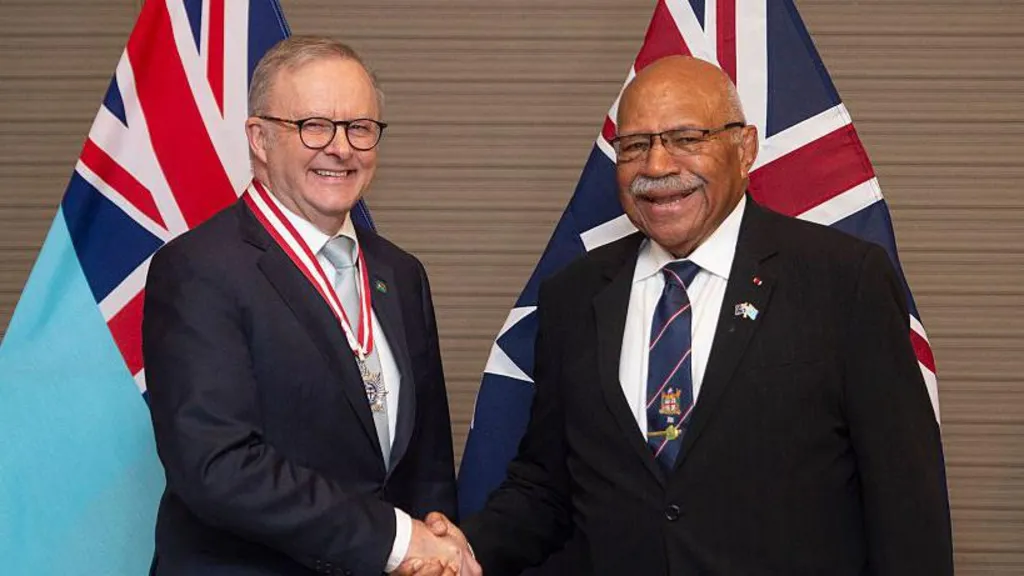
The missile launch coincided with Australia and Fiji signing the Ocean of Peace Alliance, Fiji’s first formal defence alliance and Australia’s fourth after agreements with the United States, New Zealand and Papua New Guinea.
Under the treaty, Australia will invest more than 1 billion Australian dollars over the next decade to support Fiji through measures targeting transnational crime as well as improvements to health services and infrastructure.
Australian Prime Minister Anthony Albanese described the agreement as one of the most significant partnerships Australia has undertaken with another country.
Fijian Prime Minister Sitiveni Rabuka called the treaty a defining moment in relations between the two nations, saying it represented a major step forward in bilateral cooperation.
Responding to questions about possible objections from Beijing, Rabuka said he believed China would welcome the agreement because it did not threaten Fiji’s relationship with China or Australia’s ties with Beijing.
Australia Expands Pacific Partnerships
The Fiji agreement follows another major regional pact signed last week between Australia and Vanuatu.
The new strategic agreement recognises Australia as Vanuatu’s primary policing partner and prevents the establishment of foreign military bases in the Pacific island nation.
Prime Minister Albanese is expected to continue his regional tour in the Solomon Islands, where he will hold talks with Prime Minister Matthew Wale on a proposed new security treaty.
Wale, who took office in May, has long criticised the Solomon Islands’ 2022 security agreement with China and has previously suggested creating a broader regional security framework.
Australia has increasingly strengthened defence and security cooperation with Pacific nations in recent years as competition for influence between Canberra and Beijing continues to intensify across the region.
Source: BBC









Leave a comment