


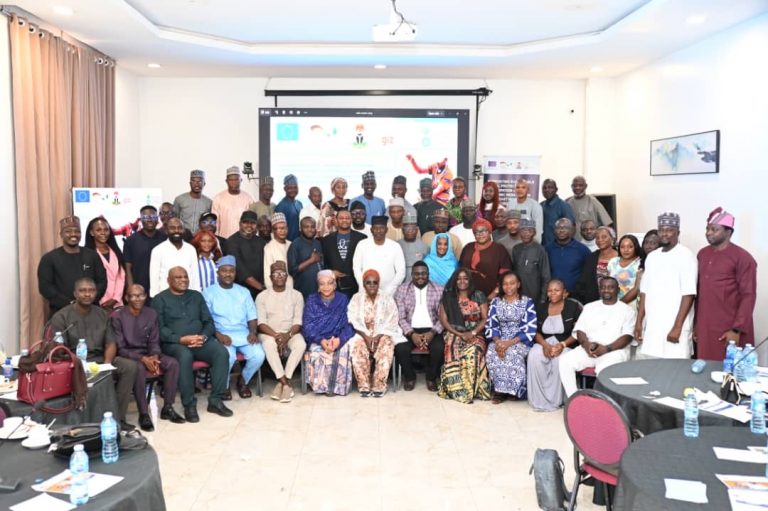
The Federal Government and the German development agency, Deutsche Gesellschaft für Internationale Zusammenarbeit (GIZ), are advancing efforts to strengthen Nigeria’s social protection system through improved institutional learning, knowledge management and coordination among government agencies and development partners.
The initiative is aimed at addressing persistent weaknesses in programme implementation, fragmented institutional knowledge and limited coordination that have affected the delivery of interventions targeting poor and vulnerable households across the country.
The renewed commitment emerged at the National Social Protection Knowledge and Learning Forum 2026, which opened in Abuja on November 23 and is scheduled to run until November 25.
Held under the theme, “From Strategy to Systems: Institutionalising Knowledge Management and Learning for Stronger Social Protection in Nigeria,” the three-day forum brings together government institutions, development partners, humanitarian organisations, researchers, civil society groups and social protection practitioners to examine ways of improving the country’s social intervention framework.
The initiative is supported by the European Union and the German government through GIZ, alongside Action Against Hunger Nigeria.
A major focus of the engagement is ensuring that experiences, operational knowledge and implementation lessons generated through years of social protection interventions are properly documented, preserved and made accessible to institutions responsible for delivering public assistance programmes.
Institutional Knowledge Gaps Threaten Programme Sustainability
Speaking during the forum, Ana Vinambres, Head of GIZ’s Supporting Sustainable Social Protection, Participation and Economic Resilience in Northeast Nigeria (SEPIN SUSI) Programme, identified inadequate knowledge management as a major challenge affecting Nigeria’s social protection institutions.
Represented by Ruth Adzege, GIZ’s Adviser on Social Protection Policy and Stakeholder Engagement, Vinambres observed that valuable implementation experiences, targeting innovations and operational evidence remained fragmented across government agencies and development projects.
She warned that institutions risk losing important knowledge when experienced personnel leave their positions or development programmes conclude without properly documenting their activities and lessons.
This institutional weakness can result in repeated implementation mistakes, inefficient resource allocation and difficulties transferring successful approaches between government institutions.
She emphasised that knowledge management should become an integral part of government operations rather than remain limited to individual projects or temporary development interventions.
The objective, she explained, is to establish systems that enable institutions to retain experience, learn from implementation challenges and use evidence to improve policy decisions and programme delivery.
Adamawa and Borno Develop Institutional Learning Frameworks
An important component of the initiative is the progress recorded in Adamawa and Borno states, where efforts are underway to integrate knowledge management into existing social protection structures.
According to GIZ, both states have made progress in developing governance frameworks, training knowledge management personnel and establishing digital repositories to preserve information generated through social protection programmes.
The initiative has also supported the development of Knowledge Management and Learning Strategies for the social protection sectors in the two states.
These interventions are designed to strengthen institutional capacity and ensure that valuable implementation experiences remain available to government officials and practitioners beyond the duration of individual development projects.
The forum is expected to formally inaugurate Social Protection Communities of Practice in Adamawa and Borno.
The platforms will provide opportunities for government officials, programme managers and other practitioners to exchange experiences, document successful interventions and identify solutions to common implementation challenges.
GIZ also disclosed that Action Against Hunger was concluding an intervention aimed at enrolling approximately 280,000 poor and vulnerable households, representing more than 1.4 million individuals, into state social registers across 21 local government areas in Adamawa and Borno.
The experience is expected to provide useful lessons on community-based targeting, grievance redress mechanisms, digital data quality and the inclusion of vulnerable populations in conflict-affected communities.
Particular attention is being given to women, persons with disabilities, internally displaced persons and residents of hard-to-reach locations.
National Social Register and Data Management Take Centre Stage
The effective management of beneficiary information also featured prominently during the discussions.
Mohammed Dikko Bala, Head of the National Social Register Unit at the National Social Safety Nets Coordinating Office (NASSCO), identified inadequate documentation and information sharing as obstacles to institutional learning within Nigeria’s social protection sector.
He explained that important findings, operational activities and standard operating procedures developed by government institutions frequently remained within individual offices and on personal computers, limiting their accessibility to other stakeholders.
To address this challenge, participants were introduced to a digital knowledge management tool built around Microsoft 365 to support the storage, retrieval and sharing of institutional information.
The platform is expected to improve access to programme documentation, operational procedures and information about the National Social Register.
Bala also stressed the importance of improving stakeholders’ understanding of the register, which contains information on poor and vulnerable households identified through community-based processes.
Meanwhile, Shikfu Shimang, Communications Manager of the National Cash Transfer Office, highlighted the need for more effective documentation of government intervention programmes.
He argued that communicating the actual experiences of beneficiaries would improve public understanding of social protection initiatives and help demonstrate how government assistance affects vulnerable households.
He explained that inclusion in the National Social Register does not automatically guarantee eligibility for every government intervention, as individual programmes operate under specific qualification requirements.
This distinction is important for improving public understanding of beneficiary selection and reducing misconceptions about how social assistance programmes operate.
State-Level Coordination and Government Ownership
At the state level, the initiative is also expected to address fragmented implementation arrangements that have historically limited coordination among social protection institutions.
Ujulu Amos, Executive Secretary of the Adamawa State Health Insurance Agency, said development partner support had contributed to the development of the state’s social protection policy, law and implementation framework.
He explained that social protection activities were previously implemented by different organisations with limited coordination, making it difficult to harmonise interventions and ensure that vulnerable residents received appropriate assistance.
The improved framework is expected to bring together programmes covering social health insurance, conditional cash transfers and other social intervention activities under a more coordinated institutional arrangement.
He noted that the approach was particularly important for Adamawa and Borno, where insecurity, displacement and disrupted livelihoods have increased the vulnerability of many households.
Improved coordination could therefore help government institutions identify vulnerable populations more effectively and align interventions with their specific needs.
FG Pushes for a Unified Humanitarian and Poverty Response System
The Federal Government has also emphasised the importance of institutional coordination in improving the effectiveness of social protection programmes.
Representing the Minister of Humanitarian Affairs and Poverty Reduction, Bernard Doro, the ministry’s Director of Social Development, Akwa Bassey, highlighted the development of social protection strengthening tools, expanded social registries and improved institutional collaboration as important areas of progress.
He also pointed to the One Humanitarian-One Poverty Response System (OHOPRS), recently approved by the Federal Executive Council, as part of efforts to improve coordination between humanitarian assistance and long-term poverty reduction interventions.
The framework is intended to strengthen beneficiary targeting, reduce duplication and connect emergency assistance with recovery, resilience and sustainable economic opportunities.
The minister urged stakeholders to ensure that the institutional improvements achieved through development partnerships become integrated into existing government structures.
His position reinforces the importance of government ownership, clear institutional responsibilities and sustainable financing in ensuring that social protection initiatives continue beyond the period of external development partner support.
Building a More Sustainable Social Protection System
Nigeria’s social protection challenge extends beyond the availability of intervention programmes. It also involves ensuring that institutions responsible for implementing them have reliable information, adequate technical capacity and effective coordination mechanisms.
For vulnerable households, weaknesses in beneficiary identification, programme coordination and information management can translate into delayed assistance, exclusion from support systems and duplication of interventions.
The ongoing collaboration between the Federal Government, GIZ, the European Union and other development partners therefore represents an effort to strengthen the institutional foundations required for more effective social protection delivery.
However, the long-term impact will depend on whether the knowledge-sharing platforms, digital repositories and coordination mechanisms introduced through the initiative become permanent components of government operations.
Sustaining these improvements will also require adequate funding, trained personnel, reliable data systems and clear accountability arrangements across federal and state institutions.
As Nigeria continues to confront poverty, displacement and economic vulnerability, building a coordinated social protection architecture will be important to ensuring that public interventions reach their intended beneficiaries.
The ultimate test of the initiative will not simply be the number of institutions trained or platforms established, but whether improved institutional learning translates into more effective programme delivery and measurable improvements in the lives of vulnerable Nigerians.
- Action Against Hunger
- Adamawa State
- Borno State
- Conditional Cash Transfers
- European Union
- Federal Government of Nigeria
- German Government
- GIZ
- Humanitarian Assistance
- Institutional Learning
- Knowledge Management
- NASSCO
- National Social Register
- Nigeria Social Protection
- OHOPRS
- Poverty Reduction
- SEPIN SUSI
- Social Intervention Programmes
- Social Protection Policy
- Social Protection Reform
- Vulnerable Households











Leave a comment