


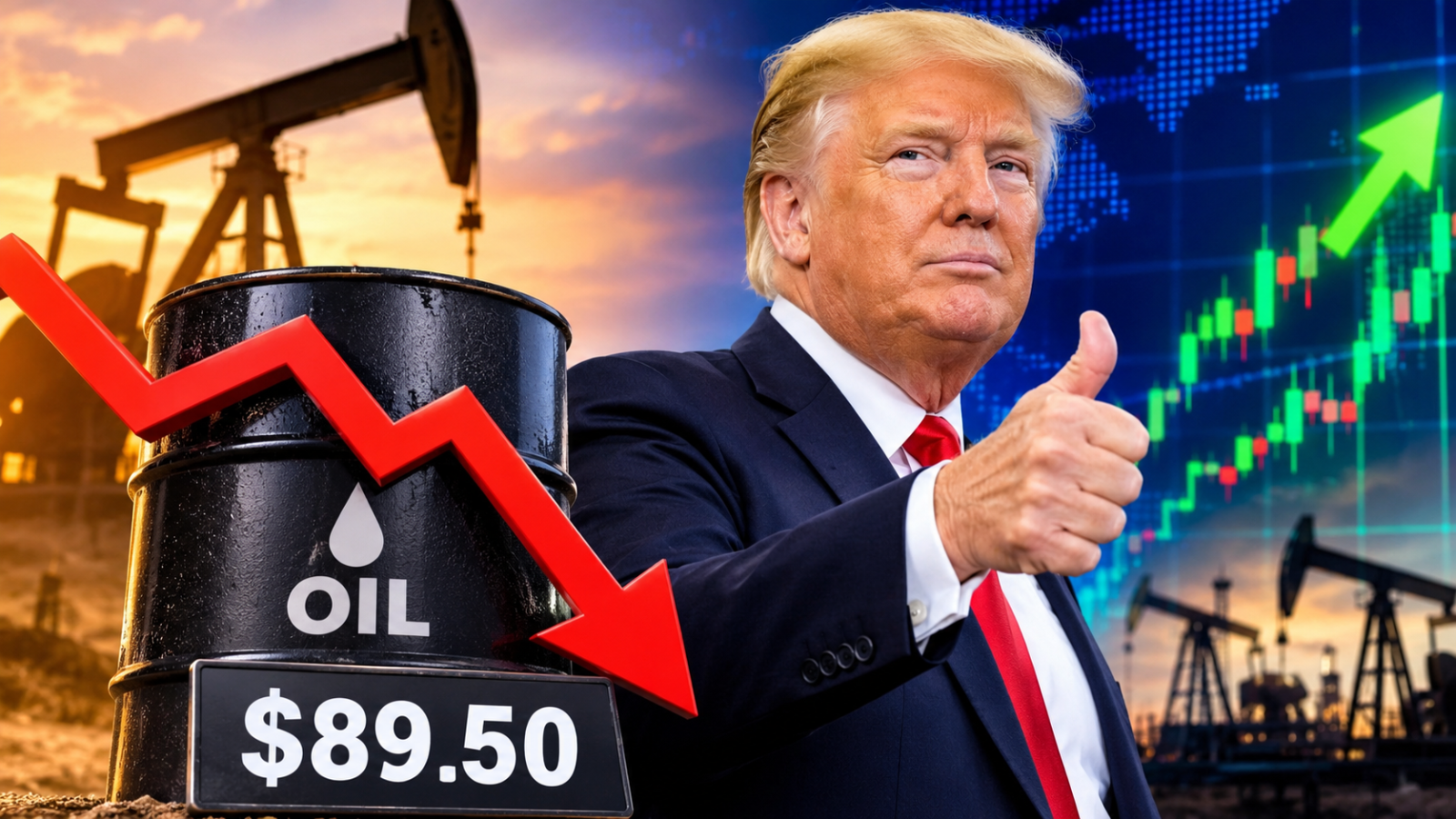
Global oil prices have fallen to their lowest level since August as investors reacted to US President Donald Trump’s suggestion that the war involving Iran was effectively over, easing concerns about prolonged disruptions to energy supplies.
Brent crude, the international oil benchmark, dropped nearly 3% to $89.66 per barrel on Tuesday, November 10, extending a decline of almost 6% recorded on Monday.
The decline followed Trump’s remarks that further military action against Iran was not immediately necessary, although he maintained that the United States remained prepared to respond if circumstances changed.
The easing geopolitical tensions lifted European stock markets, with the Stoxx 600 gaining 0.9% to 662.54 points, while London’s FTSE 100 advanced 0.4% to 10,828 points.
Airline stocks also benefited from expectations of lower fuel costs. Lufthansa gained 1.8%, while Air France-KLM rose 1.2%. However, oil producers BP and Shell declined by 1.7% and 1.5%, respectively.
The fall in crude prices could help moderate global inflation and reduce energy costs, although persistent price pressures remain a concern for central banks.
For Nigeria, lower oil prices could create additional pressure on export earnings and government revenue, particularly if the decline persists. The development also highlights the country’s exposure to movements in international energy markets.











Leave a comment