


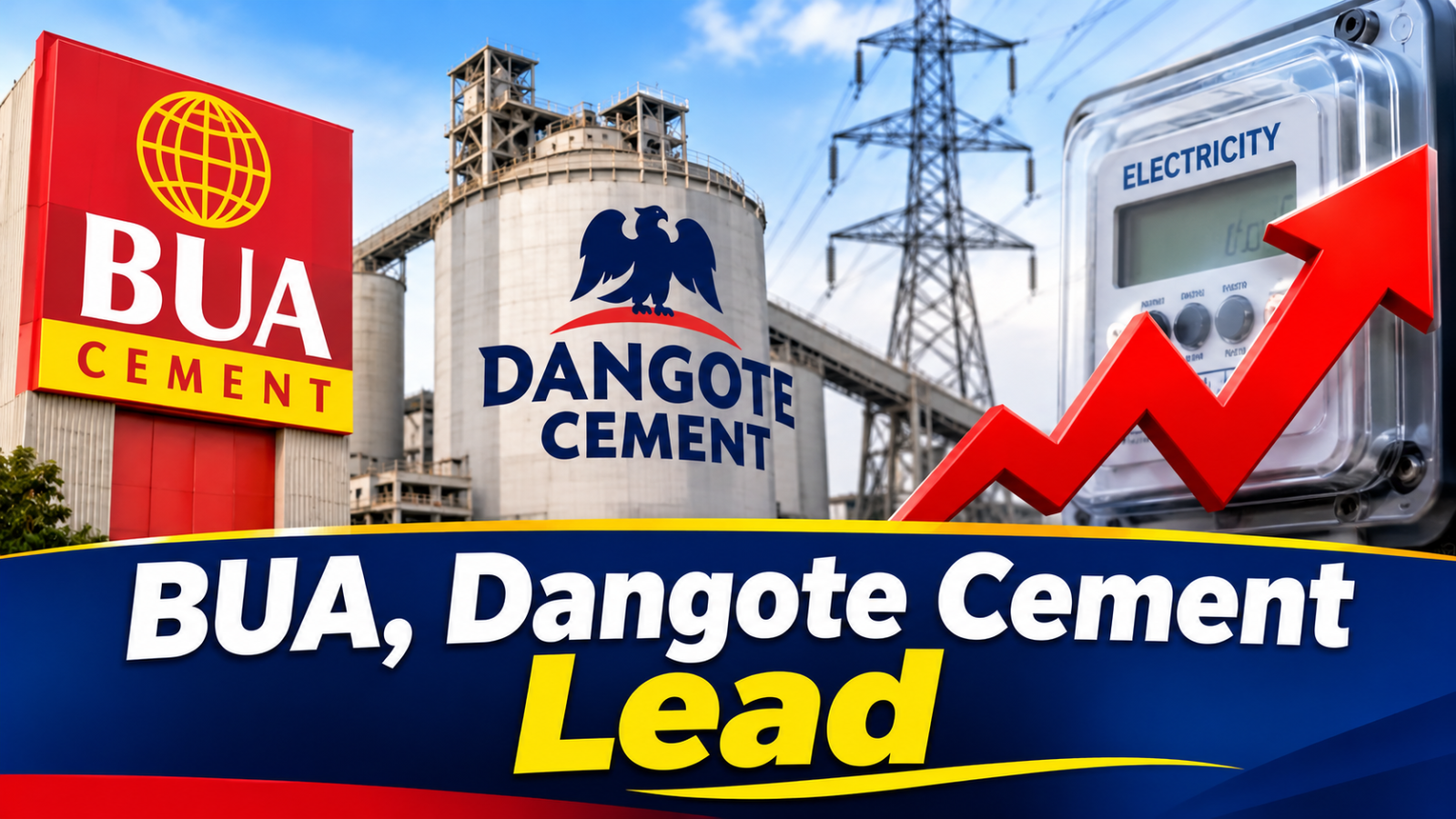
Nigeria’s manufacturing industry continues to face substantial energy costs, with Dangote Cement and BUA Cement spending a combined ₦797.1 billion on fuel and power during the first nine months of 2026.
Their unaudited financial statements for the period ended September 30 showed a 6.7 per cent increase from the ₦747.2 billion recorded in the corresponding period last year.
Dangote Cement accounted for ₦580.5 billion of the expenditure, representing a 2 per cent increase, while BUA Cement recorded a sharper 21.5 per cent rise to ₦216.6 billion.
The figures highlight the financial demands of maintaining large-scale industrial production in a country where unreliable electricity supply has encouraged manufacturers to invest heavily in alternative power generation.
The wider industry faces similar pressures. Manufacturers Association of Nigeria data showed that manufacturers spent ₦1.34 trillion on alternative energy sources in 2025, compared with ₦1.11 trillion in 2024.
For energy-intensive businesses, these expenses compete with other operational priorities, including investment in new equipment, factory expansion and workforce development.
Although manufacturers can sometimes absorb higher costs through operational efficiency and increased production, weak consumer purchasing power may limit their ability to transfer the full burden to customers.
The growing reliance on privately generated electricity also raises questions about the competitiveness of Nigerian manufacturing and the long-term consequences of persistent weaknesses in the national power supply.
See also Uzodimma: I Won’t Surrender My Senatorial Ticket to Anyone https://vistaonenews.com/2026/11/09/uzodimma-i-wont-surrender-my-senatorial-ticket-to-anyone/








Leave a comment