


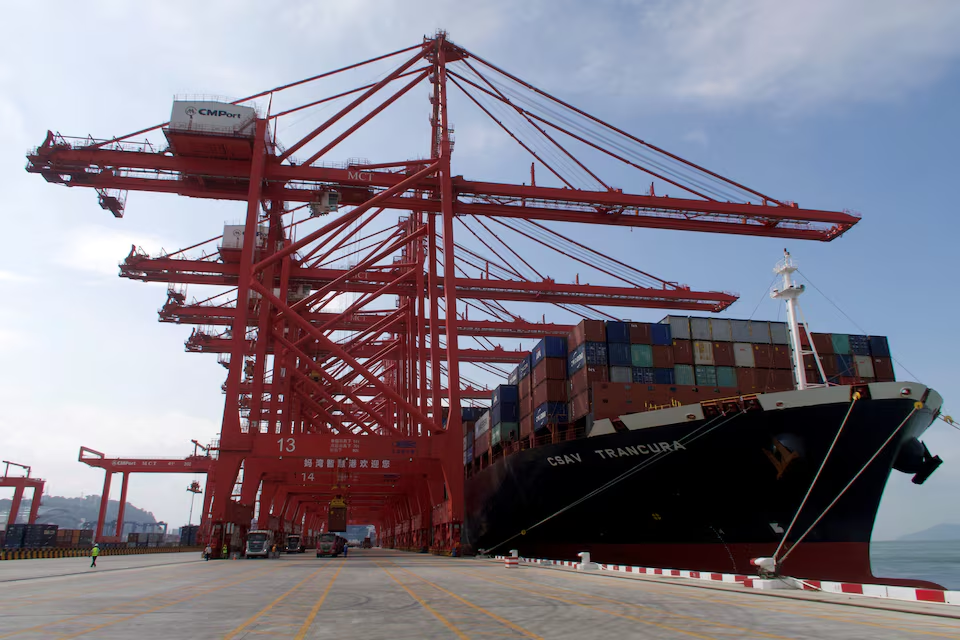
China is accelerating its investment in automated ports and digital shipping technology as it seeks a stronger position in an industry responsible for moving more than 80 per cent of goods traded worldwide by volume.
The country’s strategy centres on artificial intelligence, driverless cargo trucks, remote-controlled cranes and digital customs systems designed to make the movement of goods faster and more efficient.
China currently has 60 automated port terminals and plans to increase the number to 90 by 2030. At its Qingdao terminal, specialised cranes can reportedly handle 61 containers per hour, more than twice the productivity of conventional port facilities.
Beyond its domestic infrastructure, Beijing is expanding the international reach of its technology through equipment financing and partnerships with overseas port operators.
Chinese financing for port equipment has reached $4.8 billion across 69 ports in 47 countries since 2000, highlighting the scale of its international expansion.
However, the growing adoption of Chinese port systems has raised concerns among Western officials and analysts about data security, economic dependence and the potential vulnerability of international supply chains.
For developing economies seeking more efficient trade infrastructure, the expansion presents opportunities to modernise ports, but also raises questions about technology ownership and long-term dependence on foreign providers.
As global competition increasingly extends into digital infrastructure, China’s investments could influence how international trade operates in the coming years.
Also see Police Bust Kidnap Gang in Kano, Arrest Two Suspects https://vistaonenews.com/2026/11/09/police-bust-kidnap-gang-in-kano-arrest-two-suspects/











Leave a comment