


The Federal Government is preparing to replace the existing 1963 Fire Service Act with a new law that will transform the Federal Fire Service into the Federal Fire and Rescue Service.
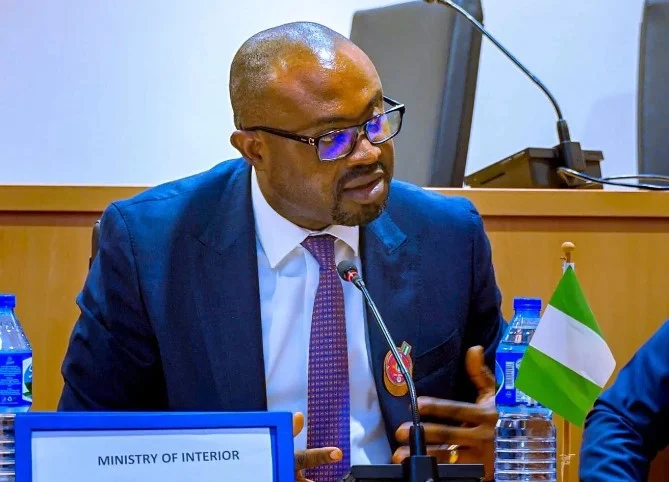
The Minister of Interior, Olubunmi Tunji-Ojo, announced the development on Monday during the 2026 National Fire Safety Week held in Abuja. He disclosed that the proposed legislation had completed its defence at the Federal Executive Council level and was expected to be presented for consideration on Thursday.
According to the minister, the proposed law will significantly broaden the agency’s responsibilities, extending its operations beyond firefighting to include emergency medical assistance, search and rescue missions, hazardous materials management, disaster response and accident investigations. Tunji-Ojo explained that the existing legislation, which has been in place for more than six decades, no longer reflects the demands of modern emergency response operations. He noted that its limitations had prevented the agency from effectively carrying out certain responsibilities.
He stressed that the government wants to establish a more capable emergency response institution that can provide immediate assistance during road accidents, floods, earthquakes and incidents involving dangerous substances. The minister also highlighted plans to introduce first aid and emergency medical services into the agency’s operations, alongside stronger fire prevention measures, safety inspections, enforcement of regulations and public awareness campaigns.
He further advocated the inclusion of basic rescue techniques and emergency response training in school curricula, explaining that such knowledge could equip Nigerians with essential skills to save lives during emergencies. Tunji-Ojo added that the Federal Fire Service would coordinate fire safety policies across the country to ensure consistent standards while working with state and local authorities.
On infrastructure development, the minister revealed that construction of a new fire service academy in Kwali, Abuja, was underway and had reached approximately 65 per cent completion. The facility is expected to be completed by December and will cover about 23 hectares, with classrooms, a library, a health centre and accommodation for more than 3,000 trainees.
He also disclosed that the government had expanded the agency’s leadership structure by increasing the number of Deputy Controllers-General from one to three, while its operational commands had grown from six to 18. Earlier, the Controller-General of the Federal Fire Service, Olumode Adeyemi, explained that the 2026 National Fire Safety Week was organized to improve public awareness and encourage greater involvement in preventing fire incidents.
He identified this year’s theme as “Building a Fire-Resilient Nigeria: Don’t Go Missing at a Time,” emphasizing the importance of fire safety awareness among individuals, communities and institutions. Adeyemi revealed that awareness campaigns would take place across all 36 states and the Federal Capital Territory, targeting locations such as schools, markets, motor parks and shopping plazas. Activities would also include roadshows and the distribution of fire safety information in indigenous languages.
The Controller-General further disclosed that 713 officers had completed training in the previous week, while another 750 personnel were currently undergoing training. He emphasized that effective fire prevention and emergency response require active cooperation between government agencies, private organizations and members of the public.
The news reports the Federal Government’s plan to modernise Nigeria’s fire service by replacing an outdated law with new legislation. The proposed reform will expand the agency’s responsibilities to include emergency medical assistance, rescue operations and disaster response, making it a more comprehensive emergency response institution.









Leave a comment