


By Benson Daniel
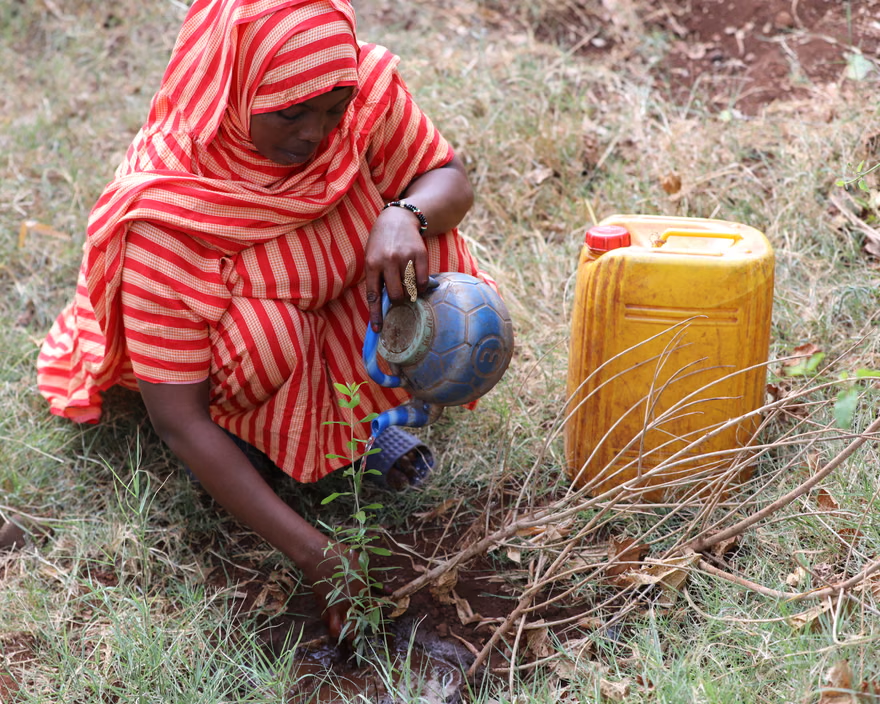
Across Ethiopia, farmers and communities are turning tree planting into a long-term effort to restore degraded land, protect water resources and strengthen resilience against climate change.
The campaign is part of Ethiopia’s Green Legacy Initiative, launched in 2019 as a national programme aimed at tackling deforestation, soil erosion, land degradation and the effects of a changing climate. The initiative has mobilised millions of people during annual planting seasons.
Government figures show that more than 48 billion seedlings had been planted during the first years of the programme, while the 2026 campaign was designed to push the cumulative figure beyond the 50-billion mark. Ethiopia set a target of planting about eight billion seedlings during this year’s rainy season.
The scale of the campaign has been demonstrated through nationwide planting exercises. On August 3, Ethiopia recorded more than 805 million seedlings planted in a single day, involving communities across the country. The annual programme has increasingly focused not simply on putting seedlings into the ground, but on selecting species suited to local conditions and improving care after planting.
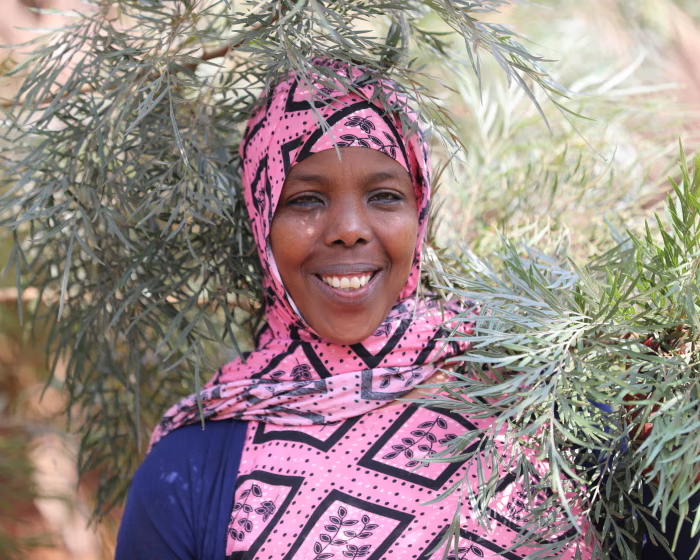
For people working at community level, however, the significance of the programme is measured in individual trees rather than headline numbers.
Farmers and local environmental activists have been helping restore damaged hillsides, watersheds and agricultural land, often returning repeatedly to water and protect young trees. Their work reflects a broader attempt to make environmental restoration part of everyday rural life rather than an activity limited to government planting days.
The initiative includes forest trees as well as agroforestry, fruit-bearing and other multipurpose species. This approach is intended to link environmental restoration with agriculture, food security and rural livelihoods.
Ethiopia has also sought to use restoration to improve the condition of watersheds and protect water supplies. International environmental programmes working with the country have stressed that successful restoration needs to go beyond planting seedlings and include healthier soils, water systems, livelihoods and long-term ecosystem management.
The programme has nevertheless attracted scrutiny over how many planted seedlings ultimately survive. A 2026 academic review found that large-scale planting under the Green Legacy Initiative has produced environmental and livelihood benefits, but also identified challenges including seedling mortality, limited species diversity and uncertainty over long-term carbon storage.
That makes post-planting care particularly important. A tree that survives for years and becomes part of a functioning forest can provide benefits far beyond the original planting campaign, including shade, soil protection, habitat, carbon storage and, in some cases, food or income.
Ethiopia’s government has continued to present the Green Legacy Initiative as a central part of its climate and development strategy. The country is also seeking to expand the economic benefits of restoration through agroforestry, forest products and emerging opportunities in carbon markets and climate finance.
For communities taking part, the ambition is ultimately much simpler: to leave healthier land for the next generation.
The road to 50 billion seedlings is therefore not only a story of a vast national planting target. It is also a collection of millions of smaller efforts — people planting, watering and protecting trees one at a time.









Leave a comment