


By Benson Daniel
The World Trade Organization has warned that the global trading system is experiencing its most serious and sustained disruption in about 80 years, as tariffs, geopolitical tensions and growing government intervention threaten to push the world economy towards deeper trade fragmentation.
In its 2026 World Trade Report, the WTO said the multilateral trading system had reached a decisive point, with existing trade rules facing pressures that could reshape the flow of goods, services and investment across borders.
The organisation warned that a shift away from broad multilateral trade cooperation towards competing geopolitical blocs could carry substantial economic costs. Under one scenario examined by WTO economists, fragmentation along geopolitical lines could reduce global gross domestic product by about 5.1 per cent and cut global exports by 18.6 per cent by 2050.
The potential impact becomes larger under a scenario in which the WTO-based system is effectively replaced by a network of separate free-trade agreements. In that case, the report estimates that global GDP could be 6.9 per cent lower and exports could decline by 26.9 per cent by 2050.
The WTO said the disruption reflects several structural changes in the global economy. Economic power has become more widely distributed, governments are intervening more heavily in markets, digital trade is expanding rapidly and geopolitical tensions are increasingly influencing commercial relationships.
The organisation also highlighted the growing use of trade restrictions and the weakening of the principle that WTO members should generally provide the same trading conditions to one another.
The share of world trade operating under the WTO’s non-discriminatory most-favoured-nation terms has fallen to about 72 per cent, from around 80 per cent two years earlier. WTO officials described the decline as a concerning trend.
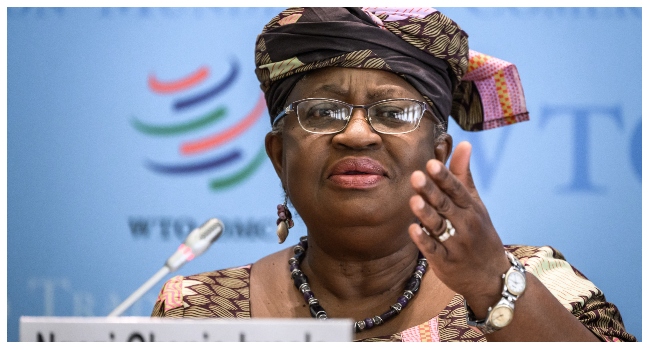
WTO Director-General Ngozi Okonjo-Iweala said the current situation represents a major challenge to the open, stable and predictable trading framework established after the Second World War. The organisation is calling for reforms that can preserve the benefits of international trade while adapting the rules to changes in the global economy.
The report also warns that the consequences would not be evenly distributed. Smaller and poorer economies could face greater exposure to the effects of fragmented trade because they often depend more heavily on international markets, imported goods, foreign investment and access to larger economies.
For African economies, the warning is particularly relevant as countries seek to expand intra-African trade while maintaining access to major markets in Europe, Asia and North America. Greater fragmentation could complicate supply chains, increase trading costs and make it more difficult for exporters to compete internationally.
Nigeria could also face implications through commodity exports, imported inputs, shipping costs and access to foreign markets. A more fragmented trading environment could increase uncertainty for businesses while making international investment decisions more complicated.
The WTO nevertheless noted that the current system has not broken down. About 72 per cent of global trade still takes place under its non-discriminatory rules, leaving room for governments to strengthen cooperation and update the framework.
The organisation’s analysis suggests that a stronger multilateral trading system could produce significantly better economic outcomes. Under a cooperation scenario, global GDP could be about 2.9 per cent higher and exports around 17.9 per cent higher by 2050 compared with a fragmented baseline.
The warning comes as global merchandise trade has shown resilience in 2026, partly supported by strong demand for technology and artificial-intelligence-related products. That resilience, however, has not removed the longer-term risks created by geopolitical tensions and changing trade policies.







Leave a comment