


By Benson Daniel
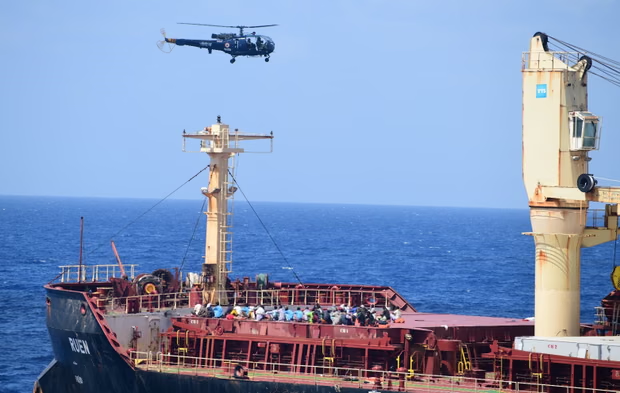
Somali piracy has returned to the waters off the Horn of Africa with renewed intensity, as regional conflicts, reduced international naval patrols and growing maritime traffic create fresh opportunities for pirate groups to target commercial vessels.
Eight hijackings have been recorded since late April, marking the sharpest resurgence in Somali piracy in about a decade. The latest wave has raised concerns among maritime authorities and shipping operators who had seen piracy decline significantly following years of international naval operations and stronger security measures.
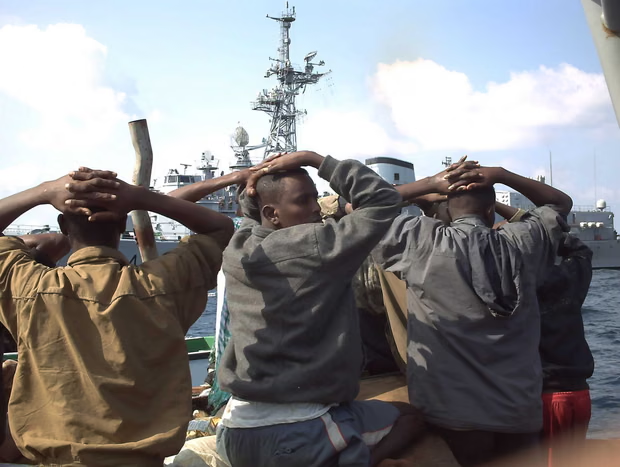
The renewed attacks are occurring against the backdrop of wider instability across the region, particularly the conflict involving the United States, Israel and Iran and continuing insecurity around the Red Sea.
The disruption of shipping through the Red Sea has forced many vessels to take longer routes around the Cape of Good Hope, increasing maritime traffic closer to Somalia’s coastline and creating opportunities for pirates to identify and pursue potential targets.
At the same time, several international naval forces that previously maintained a strong presence around the Horn of Africa have redirected resources towards other maritime security challenges.
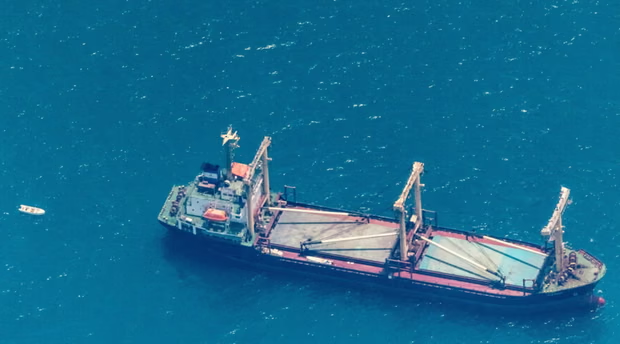
Among the most significant recent incidents was the hijacking of the Cameroon flagged vessel Lutuf, which was carrying military equipment for Turkey. The vessel was eventually released following a joint Turkish and Somali operation, although local officials said a ransom of about $2.5 million was also paid.
The payment has raised concerns that ransom negotiations could encourage further attacks by providing pirate groups with funds to recruit more fighters, acquire equipment and strengthen their operations.

The recent piracy networks have also demonstrated greater sophistication. Local officials say pirates have begun using previously hijacked vessels as motherships from which they launch attacks against other ships.
In one recent operation, pirates reportedly used the previously seized MV Sward to approach and board the Lutuf. The development highlights the growing ability of pirate groups to operate farther from shore and remain mobile after capturing vessels.

Technology is also playing a greater role in the renewed attacks, with pirate groups reportedly using satellite internet services to communicate and track potential targets.
The resurgence is particularly worrying for the international shipping industry because the waters surrounding Somalia form part of an important maritime corridor linking Europe, Asia and the Middle East.
Somalia’s long coastline and limited capacity to patrol its territorial waters have historically made the region vulnerable to piracy. Political instability, weak coastal security and limited economic opportunities have also created conditions that allow piracy networks to recruit young men.

During the previous piracy crisis, which peaked around 2011, thousands of seafarers were taken hostage and hundreds of millions of dollars were paid in ransom before an expanded international naval presence helped bring the attacks under control.
However, maritime security experts now question whether governments have the political will and financial capacity to recreate the large scale international anti piracy operation deployed more than a decade ago.
The latest attacks have therefore renewed calls for coordinated international action to protect commercial shipping and prevent piracy from becoming entrenched once again.
Experts have warned that short term military operations alone may not be enough. They argue that tackling the economic and political conditions onshore in Somalia will be essential to preventing piracy networks from rebuilding their influence.
For shipping companies, the resurgence means greater security costs, increased insurance risks and the possibility of longer and more expensive routes.
Unless international and regional authorities respond quickly, the growing number of hijackings could develop into a wider maritime security crisis along one of the world’s most important shipping corridors.














Leave a comment