


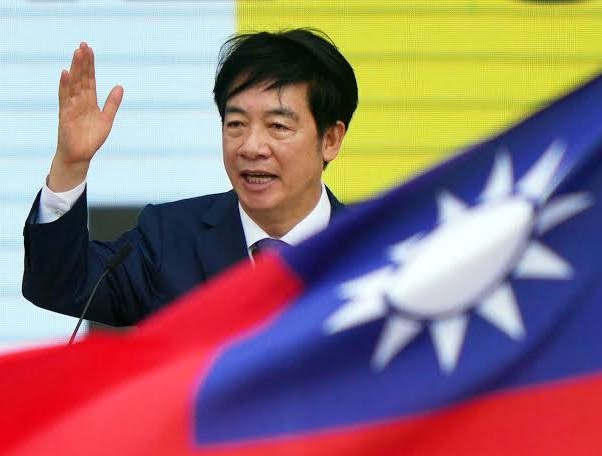
Taiwan must demonstrate its determination to defend itself and approve a six year, T$210 billion ($6.6 billion) special budget to expand its military drone capabilities, President Lai Ching-te said on Wednesday ahead of a crucial vote in the opposition-controlled parliament.
According to Reuters, Taiwan’s government wants to purchase about 210,000 military drones, arguing that the wars in Ukraine and the Middle East have demonstrated the growing importance of uncrewed systems in modern warfare.
Lai said drones were becoming a key part of Taiwan’s efforts to develop an “asymmetric” defence capability designed to counter a larger and more powerful adversary.
“This is not only a matter of national defence buildup, but also an important step for Taiwan to demonstrate its determination for self defence,” Lai told a weekly meeting of his Democratic Progressive Party ahead of an expected parliamentary vote on Thursday.
The proposed budget has faced resistance from opposition lawmakers, who control parliament. They have proposed limiting annual spending to T$40 billion, with the money drawn from the regular annual budget and overseen by the economy ministry rather than the defence ministry.
The government argues that the opposition proposal would be insufficient. Defence Minister Wellington Koo said Taiwan’s defence ministry alone expects to spend T$42.1 billion on drones in 2027, meaning the proposed annual cap would not allow the military to build its drone capabilities effectively.
Opposition lawmaker Lai Shyh-bao of the Kuomintang said purchasing such a large number of drones at once could be inefficient because the technology is advancing rapidly and equipment could become outdated.
The government says its plan would involve annual procurement and regular upgrades rather than a single bulk purchase.
The proposed drone programme is part of Taiwan’s broader effort to strengthen its defences against China, which claims the democratically governed island as its territory and has not ruled out using force to bring it under Beijing’s control.
Taiwan’s government also wants to develop a “non red” supply chain that reduces dependence on China, which dominates the global commercial drone market and is home to some of the world’s largest drone manufacturers.
At a press conference in Beijing, China’s Taiwan Affairs Office criticised Lai’s defence policies. Spokesperson Zhang Han said the “overwhelming trend towards reunification” could not be stopped.
Lai rejects Beijing’s sovereignty claims and maintains that Taiwan’s future can only be decided by its people.








Leave a comment