


By Benson Daniel
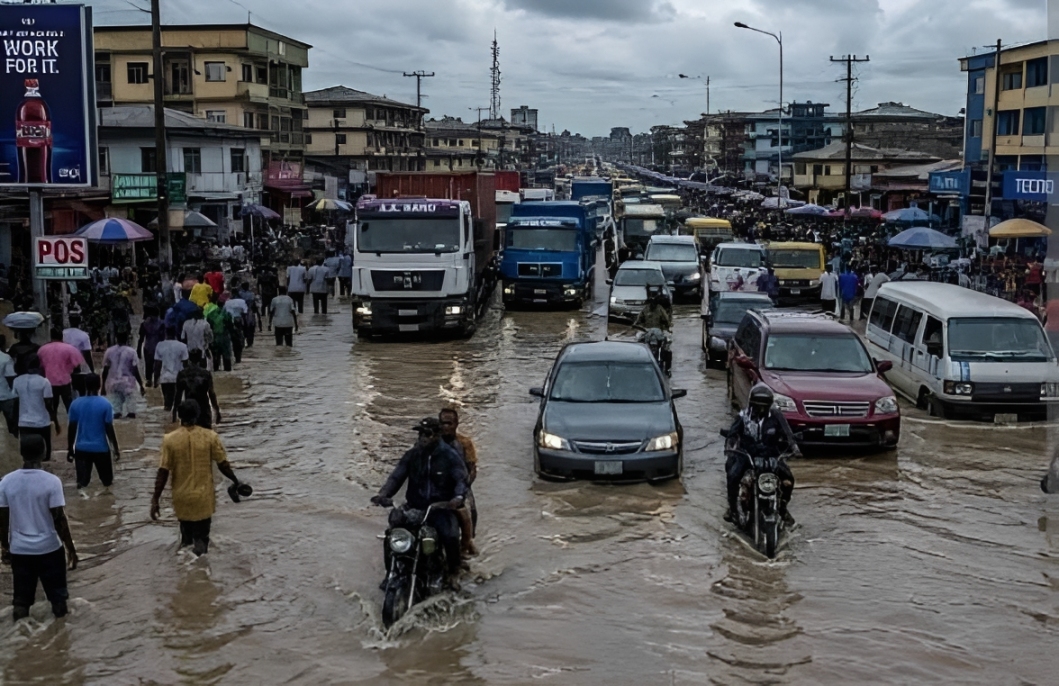
The Federal Government has placed about 2,000 locations across Nigeria’s 36 states and the Federal Capital Territory on flood watch, with 914 communities classified as being at critical risk as heavy rainfall and rising water levels increase concerns over possible flooding.
The latest alert was issued through the National Flood Early Warning Systems Centre under the Federal Ministry of Environment. The warning identified 914 locations as critical risk areas, while 430 were classified as high risk and another 656 placed under moderate flood watch.
Authorities warned that persistent rainfall, saturated soil, rapid surface runoff, rising river levels and inadequate drainage capacity could trigger flooding in several parts of the country.
The warning covers communities across the northern, central and southern parts of Nigeria, highlighting the nationwide nature of the current flood threat.
In the North East, Adamawa and Taraba are among the states with communities on the high risk list. Locations identified in Adamawa include Yola, Yola North, Yola South, Demsa, Ganye, Mayo Belwa, Mubi, Numan, Shelleng, Song and Fufore.
In Taraba, communities including Jalingo, Karim Lamido, Donga, Gassol, Lau, Ardo Kola, Takum, Wukari, Yorro and Lamurde were also identified as areas requiring increased vigilance.
Other northern states including Kebbi and Niger are also facing heightened risks, while several communities in Bauchi, Borno, Gombe, Yobe, Zamfara, Sokoto, Katsina, Kano, Kaduna and Jigawa remain under moderate risk monitoring.
The Federal Capital Territory is also included in the warning, with areas such as Abaji, Bwari, Gwagwalada, Kuje, Kwali, Kubwa, Nyanya and Wuse identified for heightened monitoring.
The situation is equally serious in parts of southern Nigeria, particularly riverine and coastal communities. Rivers State has a significant concentration of locations classified as critical risk, including Port Harcourt, Okrika, Bonny, Degema, Akuku Toru, Andoni, Opobo Nkoro, Ahoada, Obio Akpor, Eleme, Oyigbo, Emohua, Khana, Ikwerre, Gokana and Etche.
Communities in Delta, Edo, Bayelsa, Cross River and Akwa Ibom are also exposed to significant flood risks, alongside parts of the South East and South West.
The government has consequently urged communities in the critical category to maintain immediate flood watch, review evacuation routes and protect vulnerable residents and essential property.
State governments and emergency management agencies have also been encouraged to intensify surveillance around rivers, streams, bridges, culverts, drainage channels and reservoirs to identify potential threats early.
Residents in vulnerable communities have been advised to pay close attention to official weather and flood warnings and avoid activities around swollen waterways during periods of heavy rainfall.
The latest alert comes as emergency agencies continue to strengthen Nigeria’s flood response mechanisms. The National Emergency Management Agency has already activated its National Emergency Operations Centre to improve coordination and response to flood incidents across the country.
The growing flood risk also presents potential economic consequences, particularly for agriculture, transportation, housing, businesses and critical infrastructure in affected communities.
With the rainy season continuing, authorities have stressed the importance of early preparation and community level response to reduce the potential loss of lives and property.
The Federal Government has therefore called for increased cooperation among state authorities, emergency agencies, community leaders and residents to ensure that flood warnings translate into timely preventive action.










Leave a comment