


By Benson Daniel
The emergence of the Hausa “Zalla” movement has opened a fresh and increasingly important debate about identity, history, political representation and the future of Northern Nigeria.
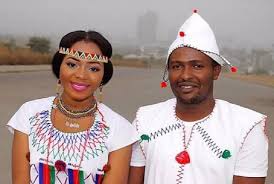
The term “Zalla”, which means “only” or “purely” in Hausa, is being used by proponents of the movement to emphasise a distinct Hausa identity separate from the long established Hausa Fulani identity that has shaped political and cultural discourse in Northern Nigeria for generations.
The movement appears to have gained momentum amid growing disagreements over identity, political influence and relations between Hausa communities and sections of the Fulani population. Recent commentary has linked its emergence to longstanding grievances, including farmer herder conflicts, insecurity and perceptions among some Hausa people that their cultural and historical identity has been inadequately represented.
At the heart of the agitation is a desire by its supporters to reclaim what they consider to be an independent Hausa identity and historical narrative. Some proponents argue that the traditional description of the North as Hausa Fulani has blurred important distinctions between different peoples, cultures and historical experiences.
The debate is not entirely new. Hausa society has for centuries existed within a complex network of ethnic, linguistic, religious and political relationships. The Hausa language and culture spread across a wide geographical area, while migration, trade, intermarriage, Islamic scholarship and political interaction contributed to the development of communities with overlapping identities.
This history makes the current debate particularly sensitive. While supporters of Hausa Zalla describe it as a cultural awakening and a demand for greater recognition, critics fear that an identity movement built around separation could deepen ethnic divisions in a region already facing insecurity, poverty and political fragmentation.
The movement has also generated disagreement among scholars, commentators and community voices. Some argue that reclaiming Hausa history is legitimate and necessary, while others believe that reducing the region’s complex history to ethnic binaries risks creating new tensions rather than addressing existing problems.
One of the strongest arguments behind the movement concerns political representation. Northern politics has historically relied heavily on broad coalitions, including alliances that brought Hausa and Fulani elites together. The emergence of a stronger Hausa centred political consciousness could therefore influence future political bargaining, electoral alliances and the distribution of political power.
However, the imperative of the movement should not necessarily be interpreted as hostility towards another ethnic group. A more constructive interpretation would be the demand for cultural recognition, historical documentation, political inclusion and socioeconomic development.
For such an agenda to have lasting value, its proponents would need to distinguish between legitimate advocacy for Hausa interests and rhetoric capable of promoting hostility against other communities. The future of Northern Nigeria cannot be secured through ethnic confrontation.
There is also an urgent need for credible historical research. Claims about the origins, political experiences and contributions of different communities should be subjected to evidence based scholarship rather than social media narratives. Historical grievances can be acknowledged without turning them into instruments for contemporary hatred.
The debate also presents an opportunity for Hausa intellectuals, traditional institutions, civil society organisations and young people to examine the challenges facing their communities beyond questions of ethnic identity. Education, insecurity, unemployment, poverty, economic stagnation and weak institutions remain more immediate threats to the wellbeing of millions of people across the North.
Ultimately, the significance of the Hausa Zalla movement will depend on what its proponents choose to make of it. If it becomes a peaceful cultural and intellectual movement focused on preserving language, history and heritage while demanding accountable leadership, it could contribute meaningfully to public debate.
But if identity is used primarily to create hostility and exclusion, the movement could deepen divisions that already complicate efforts to build a stable and prosperous Northern Nigeria.
The imperative, therefore, is not simply to determine who is Hausa and who is not. It is to ensure that the renewed conversation about Hausa identity produces knowledge, dignity, cultural confidence, political participation and development without becoming another source of conflict.




Leave a comment