


By Dorcas Francis Koji
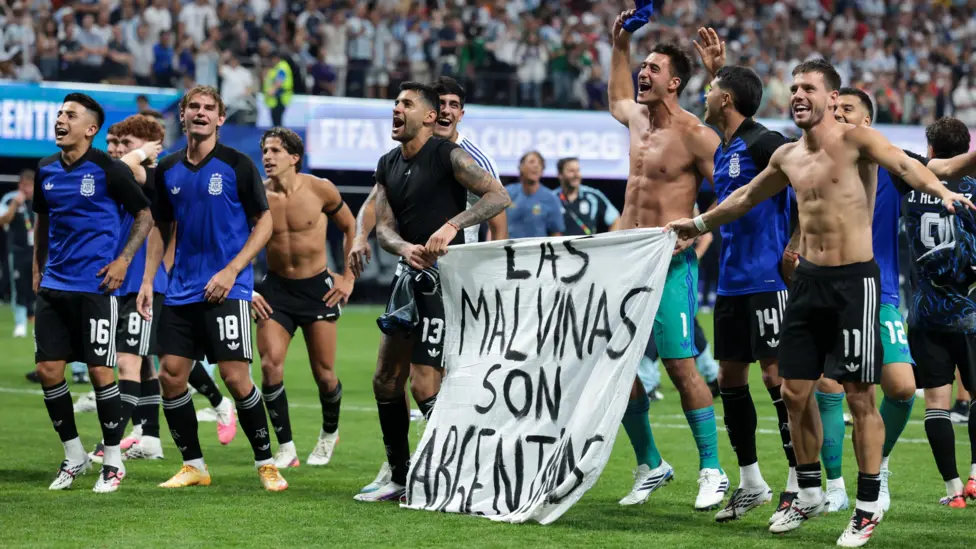
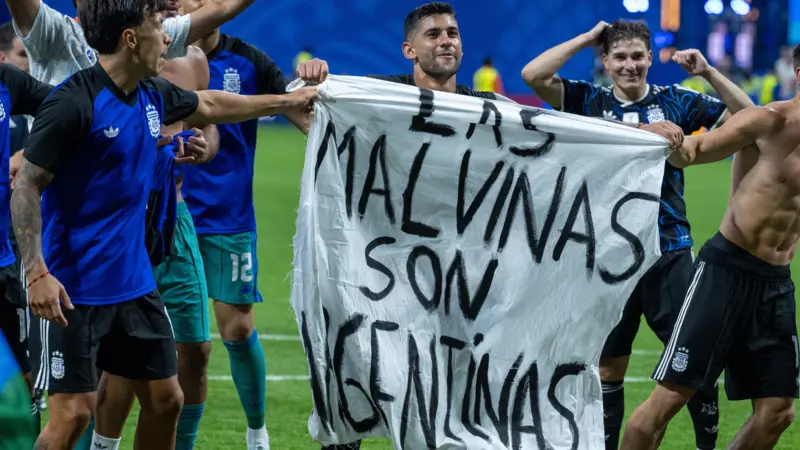
Argentina could face disciplinary action from FIFA after players of the national team were seen displaying a banner referencing the Falkland Islands following their victory in the 2026 FIFA World Cup semi-final.
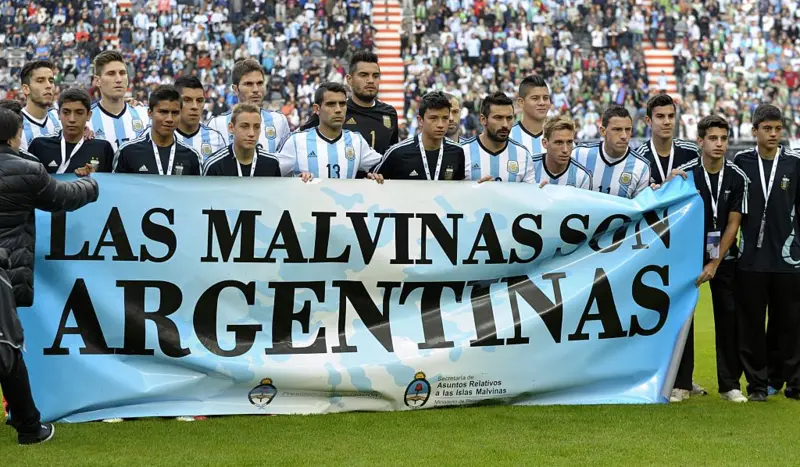
The banner, which carried a message reaffirming Argentina’s claim over the disputed South Atlantic territory, was displayed during post-match celebrations and quickly attracted international attention. The incident has reignited the long-standing political dispute between Argentina and the United Kingdom over the islands, known as the Falkland Islands in the UK and Islas Malvinas in Argentina.
According to reports, FIFA is assessing whether the display breached its disciplinary regulations, which prohibit political, religious or personal messages at World Cup matches and official tournament ceremonies. The governing body is expected to review reports from match officials and tournament delegates before determining whether formal disciplinary proceedings should be opened.
FIFA has consistently maintained a strict stance against political expressions at its competitions, insisting that the World Cup should remain free from political messaging. The organisation’s disciplinary code allows sanctions ranging from warnings and fines to other sporting measures, depending on the nature and severity of any breach.
The incident has generated mixed reactions across the football world. While many Argentine supporters defended the banner as a patriotic expression tied to national identity, others argued that football’s biggest tournament should remain focused solely on the sport and avoid becoming a platform for political disputes.
Neither the Argentine Football Association nor FIFA had issued a detailed public statement on the matter at the time of publication. However, any disciplinary process would follow FIFA’s established procedures, with the association expected to have an opportunity to respond before a final decision is reached.
The controversy comes as Argentina prepares for the 2026 World Cup final, where the defending champions will be aiming to retain their title. While attention should ordinarily be centred on preparations for the showpiece event, the investigation threatens to overshadow the team’s build-up.
Whether FIFA ultimately decides to impose sanctions or not, the episode serves as another reminder of the delicate balance between national identity and the governing body’s commitment to keeping international football free from political demonstrations.









Leave a comment