


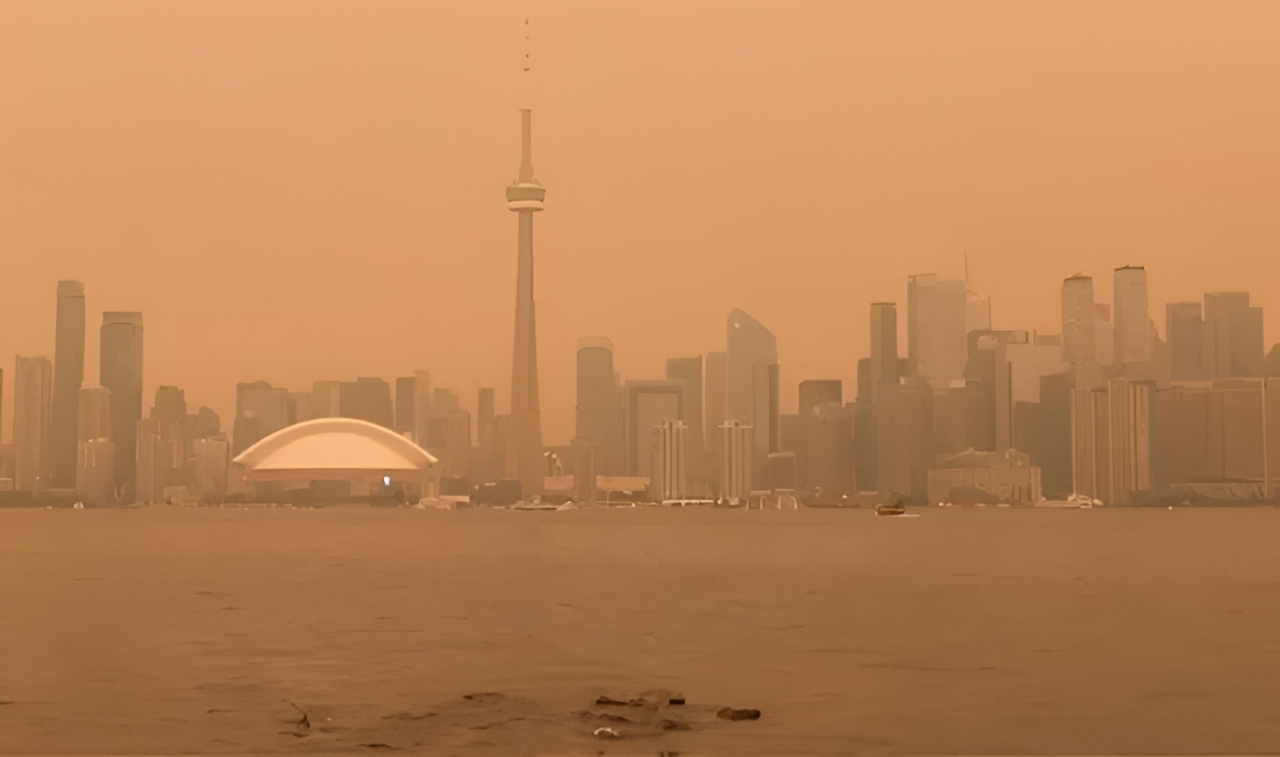
Thick smoke from wildfires burning across northern Ontario has pushed Toronto’s air quality to the worst among major cities worldwide, while hazardous smoke continues to drift into the northeastern United States, prompting health warnings on both sides of the border.
Environment Canada recorded Toronto’s Air Quality Health Index at 10+, the highest risk category, as dense smoke from hundreds of active wildfires turned skies hazy and reduced visibility across southern Ontario. Air quality monitoring firm IQAir ranked Toronto as the world’s most polluted major city on Wednesday.
The smoke has also spread into parts of the United States, including New York and other northeastern states, where officials issued air quality advisories and urged residents to limit prolonged outdoor activities. The warnings come just days before the FIFA World Cup final is scheduled to be held in neighbouring New Jersey.
The Canadian Interagency Forest Fire Centre reported 835 active wildfires nationwide, with 112 classified as out of control. Several communities in northern Ontario have been evacuated, while emergency crews continue battling blazes fueled by hot, dry and windy conditions.
Health authorities warned that wildfire smoke contains fine particulate matter that can aggravate asthma, heart disease and other respiratory conditions. Residents, particularly children, older adults, pregnant women and those with underlying health conditions, were advised to remain indoors where possible, keep windows closed and monitor official air quality updates.
Scientists say rising global temperatures are contributing to longer and more intense wildfire seasons by creating hotter, drier conditions that allow fires to spread more rapidly. Officials cautioned that smoke could continue affecting large areas of Canada and the United States until weather conditions improve.











Leave a comment