


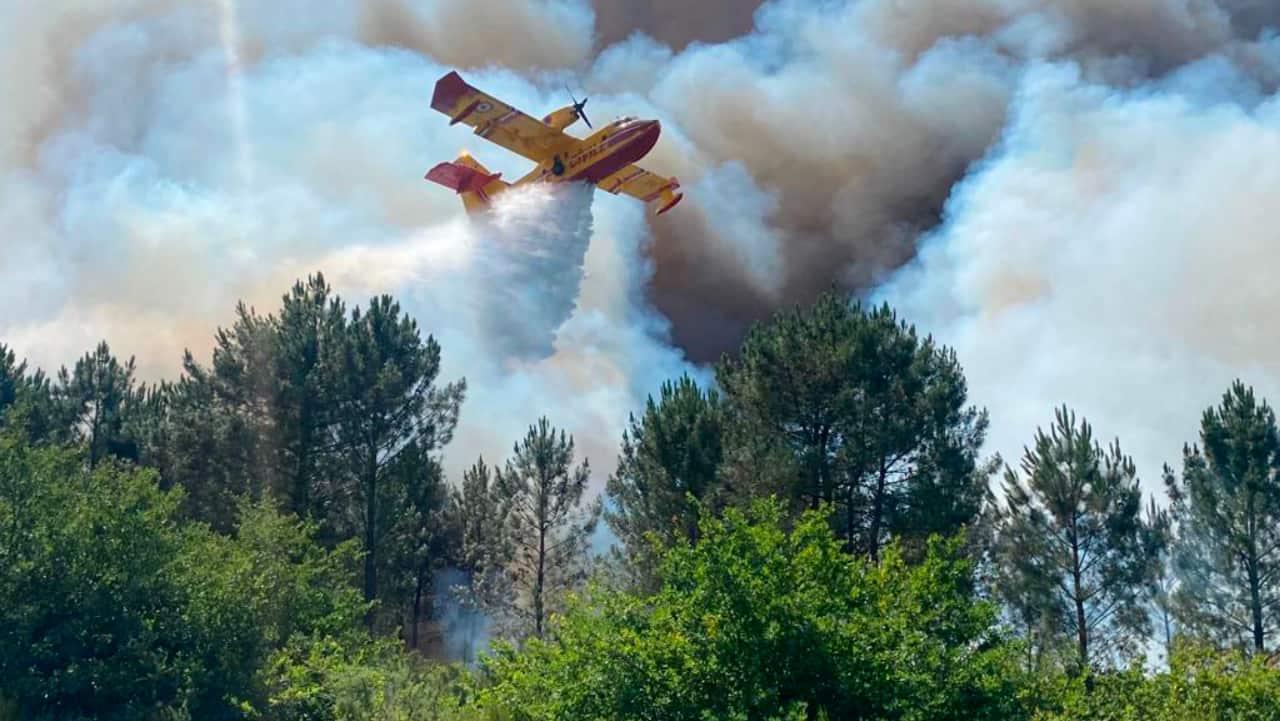
PARIS, July 13 — French authorities have deployed hundreds of firefighters and aerial water bombers to battle a fast moving wildfire south of Paris, as an intense heatwave continues to drive dangerous fire conditions across large parts of Europe.
As reported by Reuters, The blaze erupted on Sunday near the historic Fontainebleau Forest, about 70 kilometres southeast of the French capital, rapidly spreading through dry woodland amid soaring temperatures and strong winds. By Monday, the fire had scorched more than 800 hectares of forest, forcing the closure of the A6 motorway, one of France’s busiest transport routes linking Paris with Lyon and southern France.
More than 400 firefighters, supported by two water bombing aircraft, helicopters and surveillance planes, worked through the night to contain the flames. Officials said the wildfire remained active on Monday and warned that it could take days, or even weeks, to fully extinguish.
French Interior Minister Laurent Nuñez described the circumstances surrounding the fire as “suspicious,” noting that investigators had identified multiple ignition points within a relatively small area, raising the possibility that the blaze may have been deliberately started. Authorities have opened an investigation.
The wildfire comes as France experiences its third major heatwave of the summer, with exceptionally high temperatures leaving vegetation tinder dry and significantly increasing the risk of wildfires. Around 26 million people across the country remain under the highest level of heat alert as forecasters warn that extreme temperatures are expected to persist into the middle of the week.
The crisis extends well beyond France. Across southern Europe, prolonged heat and drought have fuelled devastating wildfires in Spain, Portugal and other Mediterranean countries.
In Spain, authorities said the death toll from a wildfire in Almería Province has risen to 13, while 10 people remain missing. Emergency crews continue search and recovery operations as firefighters work to contain the blaze.
The prolonged heat has also disrupted transport, agriculture and energy production across Europe. High river temperatures have affected nuclear power generation in parts of France, while low water levels have hindered freight transport. Farmers in several countries have reported declining crop yields and livestock production as the extreme weather persists.
Scientists say Europe is experiencing increasingly frequent and severe heatwaves driven by climate change, with prolonged periods of extreme heat creating ideal conditions for destructive wildfires.
Recent scientific assessments estimate that the late June heatwave contributed to more than 10,000 excess deaths across Europe, with elderly people among the most vulnerable. The World Health Organization has warned that further episodes of extreme heat are likely during the summer, urging governments to strengthen preparedness measures and protect at risk populations.
The wildfire near Paris is among the most significant to threaten the French capital in recent years, highlighting the growing impact of extreme weather on regions that have historically faced lower wildfire risks.











Leave a comment