


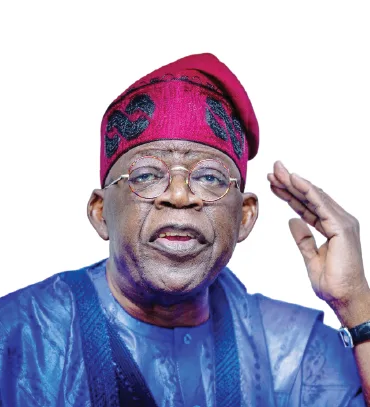
President Bola Tinubu has proposed a reduction of Nigeria’s 2026 national budget from ₦68.32 trillion to ₦65.18 trillion while retaining the existing ₦31.46 trillion fiscal deficit.
The proposed adjustment, representing a reduction of approximately ₦3.15 trillion, was communicated to the National Assembly through a bill seeking to repeal and re-enact the 2026 Appropriation Act.
In a letter dated November 20, 2026, addressed to the Speaker of the House of Representatives, Tajudeen Abbas, the President explained that the revision was intended to align government expenditure with available resources and existing financial obligations.
The letter was read during plenary on Tuesday, November 24, as the Federal Government sought legislative approval for the revised spending framework.
Under the proposal, projected Federal Government revenue, including earnings from government-owned enterprises, stands at ₦33.72 trillion, while aggregate capital expenditure is estimated at ₦26.23 trillion.
FG Explains Reasons for Budget Adjustment
According to the President, the proposed revision is designed to regularise certain expenditures incurred by the Nigerian National Petroleum Company Limited (NNPCL) on behalf of the Federation.
The adjustment will also address underprovided debt-servicing obligations, recognise previously issued capital warrants and supplementation commitments, and provide for outstanding refunds to Ministries, Departments and Agencies (MDAs) and special accounts.
Tinubu explained that most capital allocations to MDAs under the revised framework would cover projects and commitments for which funds had already been authorised.
He added that selected new capital and overhead provisions had been introduced to support priority national interventions.
Agriculture and Infrastructure Remain Priorities
The President identified the completion of critical road projects, protection of agricultural production, reduction of production costs and improvement of farm yields among the priorities under the revised budget.
Other areas highlighted include improving farmers’ access to markets and addressing water-related vulnerabilities affecting agricultural activities and livelihoods.
The proposed interventions are expected to support economic productivity, strengthen agricultural activities and facilitate the completion of important infrastructure projects.
Tinubu said the adjustments were intended to prioritise existing commitments and improve the credibility and implementation of the capital budget while maintaining fiscal restraint.
₦31.46tn Deficit and Borrowing Plan Retained
Despite the proposed reduction in total expenditure, the Federal Government has maintained the fiscal deficit at ₦31.457 trillion, equivalent to 5.64 per cent of Gross Domestic Product (GDP).
The proposed new borrowing also remains at ₦29.218 trillion, comprising ₦18.428 trillion in domestic borrowing and ₦10.790 trillion in foreign borrowing.
On external financing, the President explained that the proposed $7.7 billion foreign loan, estimated at approximately ₦10.37 trillion, would finance the existing external borrowing provision without expanding the overall borrowing envelope.
National Assembly to Consider Revised Budget
Tinubu has requested the cooperation of lawmakers to ensure the speedy consideration and passage of the proposed bill.
He maintained that the revised appropriation was necessary to facilitate orderly budget implementation and enable the government to settle outstanding financial obligations.
The proposal will undergo legislative scrutiny before it can become law. Until lawmakers approve the amendment, the existing 2026 Appropriation Act remains the operative budget framework.
The proposed adjustment places renewed attention on government revenue generation, public expenditure management, infrastructure delivery and the financing of Nigeria’s development priorities.




Leave a comment