



Nigeria’s agricultural sector is projecting modest growth in crop production during the 2026 wet season, but persistent climate challenges, rising farm input costs and weak productivity continue to threaten efforts to strengthen national food security.
Findings from the 2026 Wet Season Agricultural Performance Survey conducted by the National Agricultural Extension and Research Liaison Services (NAERLS), Ahmadu Bello University, Zaria, indicate that national cereal production is expected to reach approximately 29.39 million metric tonnes, representing a 1.84 per cent increase over the 2025 baseline.
The assessment presents a cautiously positive outlook, with 13 of the 17 major crops reviewed projected to record higher production than the previous year. However, researchers warn that the anticipated improvements remain vulnerable to flooding, irregular rainfall, pest outbreaks, expensive agricultural inputs and inadequate extension services.
The findings were presented by the Executive Director of NAERLS, Professor Yusuf Ahmad Sani, as part of an assessment of agricultural performance, production trends and challenges affecting farmers across the country.
Major Crops Record Encouraging Production Outlook
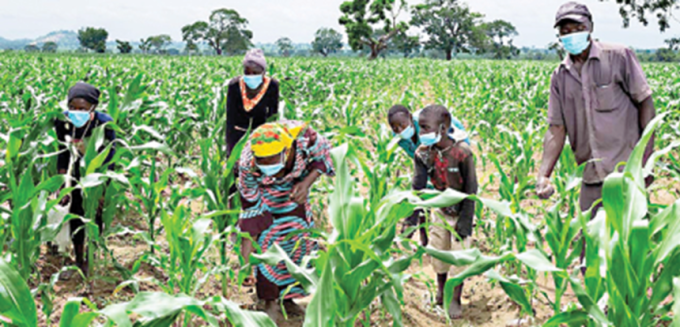
According to the survey, maize is expected to remain Nigeria’s leading cereal crop, with projected production of 11.67 million metric tonnes in 2026.
Rice production is estimated at 9.63 million metric tonnes, while sorghum is projected to reach approximately 6.55 million metric tonnes. Other important agricultural commodities are also expected to contribute significantly to national food production.
Cassava output is projected at 66.73 million metric tonnes, groundnut at 5.41 million metric tonnes and cowpea at approximately 4.46 million metric tonnes.
However, the survey indicates that the anticipated growth is not evenly distributed across all crops, with ginger, cocoyam, millet and soybean among the commodities facing production setbacks.
The report emphasised that the figures remain projections and will require verification against actual harvest outcomes.
Climate Variability and Flooding Threaten Farm Output
Despite the positive production outlook, changing weather conditions remain a major concern for farmers.
The assessment identified significant differences in rainfall and temperature patterns across Nigeria’s geopolitical zones, highlighting the growing difficulty of managing agricultural activities under increasingly variable climatic conditions.
Severe flooding was reported in Niger, Jigawa, Yobe, Ogun, Osun, Anambra and Ebonyi states, with affected farming communities facing risks of damaged crops, disrupted agricultural activities and losses of productive assets.
The survey also identified fall armyworm outbreaks as a major threat to maize production, particularly in Kano and Taraba states.
Other reported crop-related challenges include rice blast, cassava mosaic disease, yam dry rot, ginger blight and tomato pest infestations.
The findings underscore the importance of stronger agricultural surveillance, early warning systems and improved access to climate-resilient farming technologies.
Rising Fertiliser Prices Increase Farmers’ Burden
The rising cost of agricultural inputs remains another major obstacle to improved productivity.
The assessment documented considerable variations in fertiliser prices across the country’s six geopolitical zones, with its national estimates placing a 50-kilogram bag of NPK fertiliser at approximately ₦38,000 and urea at ₦43,000.
High fertiliser prices, alongside expensive seeds, crop protection products, transportation and other production expenses, are placing additional pressure on farmers.
The situation could discourage the application of recommended fertiliser quantities and limit farmers’ ability to adopt improved production practices.
Limited access to affordable seasonal financing further compounds the problem, particularly for smallholder farmers who depend heavily on seasonal income and agricultural credit.
NAERLS Calls for Stronger Agricultural Support
To address the challenges identified in the survey, NAERLS recommended stronger government investment in agricultural monitoring, affordable farm inputs, irrigation infrastructure and extension services.
The assessment also called for improved access to quality seeds, mechanisation, seasonal financing and practical agricultural advisory support.
It further recommended strengthening flood and drought preparedness, pest surveillance and disease-control programmes to minimise production losses.
Investment in storage facilities, processing infrastructure, cold-chain systems and transportation was also identified as necessary to reduce post-harvest losses and improve farmers’ earnings.
The report stressed that agricultural development should focus not only on expanding cultivated land but also on improving productivity per hectare through better farming methods and appropriate technologies.
Food Security Requires Sustainable Agricultural Productivity
Nigeria’s projected agricultural growth offers some encouragement for the country’s food security objectives. However, the challenges identified in the 2026 survey demonstrate that increased production alone may not be sufficient to meet the demands of a growing population.
Strengthening agricultural resilience will require coordinated action from federal and state governments, research institutions, financial organisations, input suppliers and farmers.
Improved access to affordable agricultural inputs, effective extension services, climate information and modern farming technologies will be essential to sustaining production gains.
As the country works towards improving food availability and stabilising agricultural markets, the priority must shift towards building a farming system capable of delivering higher productivity while withstanding climate and economic pressures.
Ultimately, Nigeria’s ability to convert the modest gains projected for the 2026 wet season into sustainable agricultural growth will depend on how effectively these longstanding challenges are addressed.
- Agricultural Development
- Agricultural Productivity
- Cereal production Nigeria
- Climate change and agriculture
- Crop Production
- Fertiliser prices
- Flooding
- Flooding in Nigeria
- Food security Nigeria
- NAERLS report
- Nigeria Agriculture
- Nigerian Farmers
- rising fertiliser prices and pest outbreaks challenge agricultural productivity. Focus Keyphrase: Nigeria 2026 wet season farming Tags: 2026 wet season farming
- SEO Title: Nigeria's 2026 Wet Season Records Modest Farm Gains Amid Rising Costs Meta Description: Nigeria projects 1.84% growth in 2026 cereal production as climate risks
- Yusuf Ahmad Sani









Leave a comment