


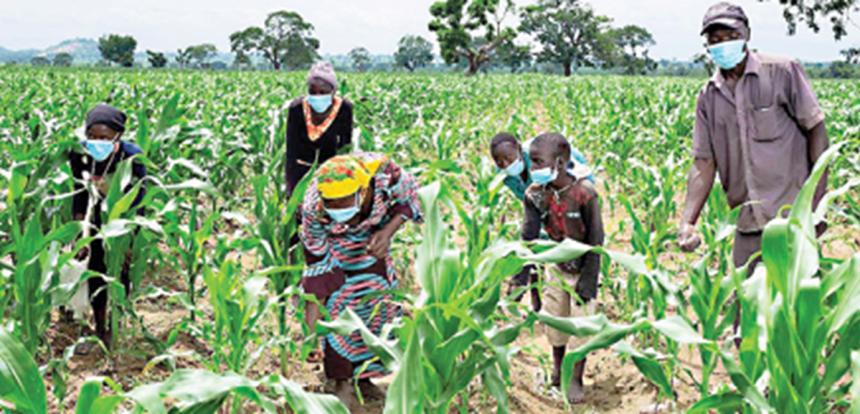
The Federal Government is intensifying efforts to strengthen fertiliser availability ahead of the dry-season farming period through plans to reactivate underutilised fertiliser blending plants across the country.
The initiative is expected to improve domestic fertiliser production, expand access to essential agricultural inputs and support farmers preparing for the next dry-season cultivation cycle.
Reviving dormant and underperforming blending facilities could also help reduce dependence on imported fertiliser, strengthen local production capacity and improve the resilience of Nigeria’s agricultural value chain.
Government Targets 3.5 Million Bags of Fertiliser
Under the Renewed Hope Agricultural Stabilisation and Productivity Initiative, President Bola Ahmed Tinubu has approved funding to support the revival of fertiliser blending facilities and the procurement of locally manufactured fertiliser.
Vice President Kashim Shettima disclosed the development during a meeting with fertiliser industry stakeholders at the Presidential Villa in Abuja.
The Federal Government is targeting approximately 3.5 million bags of fertiliser for distribution to farmers ahead of the dry-season farming period.
The Fertiliser Producers and Suppliers Association of Nigeria (FEPSAN) disclosed that its members had approximately 29,000 metric tonnes of finished NPK fertiliser available, while existing raw materials could support the production of another 148,000 metric tonnes of NPK 20-10-10 fertiliser.
FG Seeks to Reduce Farmers’ Production Costs
Shettima expressed concern that several fertiliser blending plants across the country were operating below capacity despite increasing demand for agricultural inputs.
He explained that restoring operations at the facilities would help increase domestic production, reduce fertiliser costs and create employment opportunities across the agricultural value chain.
The Vice President noted that the intervention would also support businesses involved in transportation, warehousing and agricultural input distribution.
He stressed that the ultimate objective was to ensure that Nigerian farmers could access locally produced fertiliser at affordable prices.
Government Strengthens Monitoring and Distribution
As part of efforts to ensure transparency, Shettima directed the Office of the National Security Adviser to verify fertiliser stocks declared by industry operators and monitor the distribution process.
He also emphasised that farmers in communities affected by insecurity and those living in difficult-to-access areas must not be excluded from the programme.
Meanwhile, Minister of Budget and Economic Planning, Senator Abubakar Atiku Bagudu, disclosed that stakeholders had identified approximately 496,000 metric tonnes of fertiliser-related stocks that could support the initiative.
The government also designated the Bank of Agriculture and the Bank of Industry as fund administrators and financial intermediaries for the programme.
Focus on Food Security and Domestic Production
The fertiliser intervention represents another effort by the Federal Government to strengthen Nigeria’s agricultural production capacity and improve food security.
By supporting local manufacturers and restoring underutilised facilities, the initiative is expected to stimulate industrial activities while improving farmers’ access to essential inputs.
However, its success will largely depend on timely production, effective monitoring and the ability to deliver fertiliser to farmers at affordable prices before the dry-season planting window.
The Federal Government’s immediate priority is to translate existing industrial capacity and available raw materials into accessible agricultural inputs that can support increased food production nationwide.










Leave a comment