


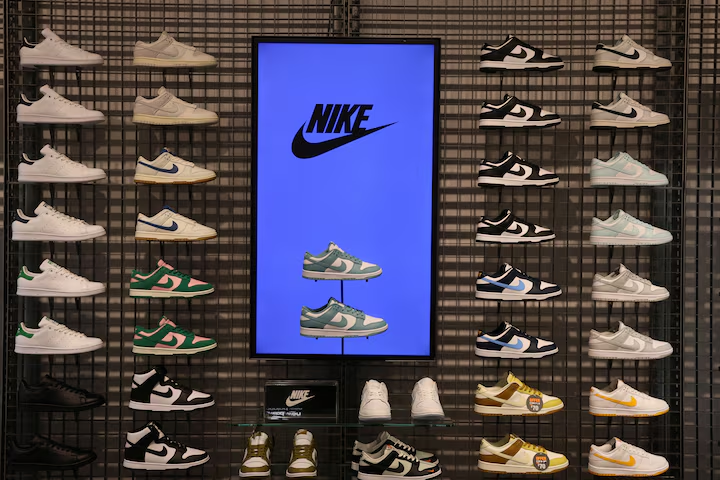
Nike is facing growing pressure from investors to demonstrate that its restructuring programme can deliver a genuine business recovery, as falling global sales, weakening demand and stronger competition raise questions about the effectiveness of its efforts to regain market leadership.
The American sportswear giant is holding its first investor gathering in nearly a decade on November 16 and 17, giving senior executives an opportunity to explain how they intend to reverse years of declining sales and restore confidence in the company’s long-term prospects.
However, investors appear unconvinced that reducing operating costs alone will solve the problems confronting the business. Their attention is increasingly shifting towards Nike’s ability to develop products that attract consumers, strengthen its brand appeal and compete effectively against rivals such as Adidas and China’s Anta.
The company has announced plans to generate approximately $2.5 billion in cumulative savings through fiscal 2031 under its restructuring programme, known as Pace. The initiative includes workforce reductions, changes to its geographical operating structure and adjustments to its logistics and distribution operations.
The savings are expected to come from a broader effort to make the organisation more efficient and redirect resources towards product innovation, marketing and consumer engagement.
Yet the scale of the planned savings has not removed concerns about the company’s financial performance. Nike continues to experience weakness in its sportswear and Jordan businesses, while declining demand in China, previously one of its important growth markets, has added to its difficulties.
The company’s challenges have also raised questions about the turnaround strategy of Chief Executive Officer Elliott Hill, who took over the position in 2024.
Nike’s shares have lost more than half their value during his two-year tenure, reflecting investor concerns about the pace of recovery and the company’s ability to regain lost market share.
The pressure comes as competition in the global sportswear industry intensifies. Rival brands are competing for consumers through new designs, performance-focused footwear and lifestyle collections, making product innovation increasingly important to maintaining customer loyalty.
For Nike, the problem extends beyond the cost of running its business. Investors want evidence that its products can attract buyers without relying heavily on discounts and promotional campaigns.
This is particularly important because excessive discounting can weaken profit margins and reduce the premium image that major sportswear brands depend on to maintain their market position.
Nike has begun introducing new products as part of its effort to strengthen its appeal. The latest developments include updated versions of its Vaporfly and Vomero running shoes, an expanded Mind collection designed around athletes’ mental focus and an inflatable jacket.
However, the commercial impact of these products remains uncertain, with several expected to reach consumers from next year.
The company is also attempting to address weaknesses within its Jordan business by reducing the number of retro product releases. The move is intended to tackle oversupply and restore some of the exclusivity associated with the brand.
China presents another significant challenge. Nike has faced criticism over its ability to respond to changing consumer preferences in the market, where local and international competitors are fighting for greater market share.
The company has appointed its first vice president of product creation for Greater China as part of efforts to strengthen local innovation and develop products that better reflect regional consumer demand.
There are also concerns that some of the planned cost reductions could affect the customer experience. Scaling back logistics operations, for example, could create longer delivery times if the company fails to maintain an efficient distribution network.
Such an outcome would risk undermining the very customer relationships Nike needs to rebuild.
The investor gathering also places attention on Chief Financial Officer Dave Denton, who joined the company three months ago after previously working at Pfizer. Investors will be looking for a clearer explanation of the company’s financial priorities and its longer-term strategy through 2031.
Ultimately, Nike’s recovery will depend on whether consumers respond positively to its new products and whether the company can translate its restructuring efforts into stronger sales and sustainable profitability.
The challenge facing the sportswear manufacturer is therefore not simply how much money it can save, but whether those savings can support a business capable of winning back customers in an increasingly competitive global market.








Leave a comment