


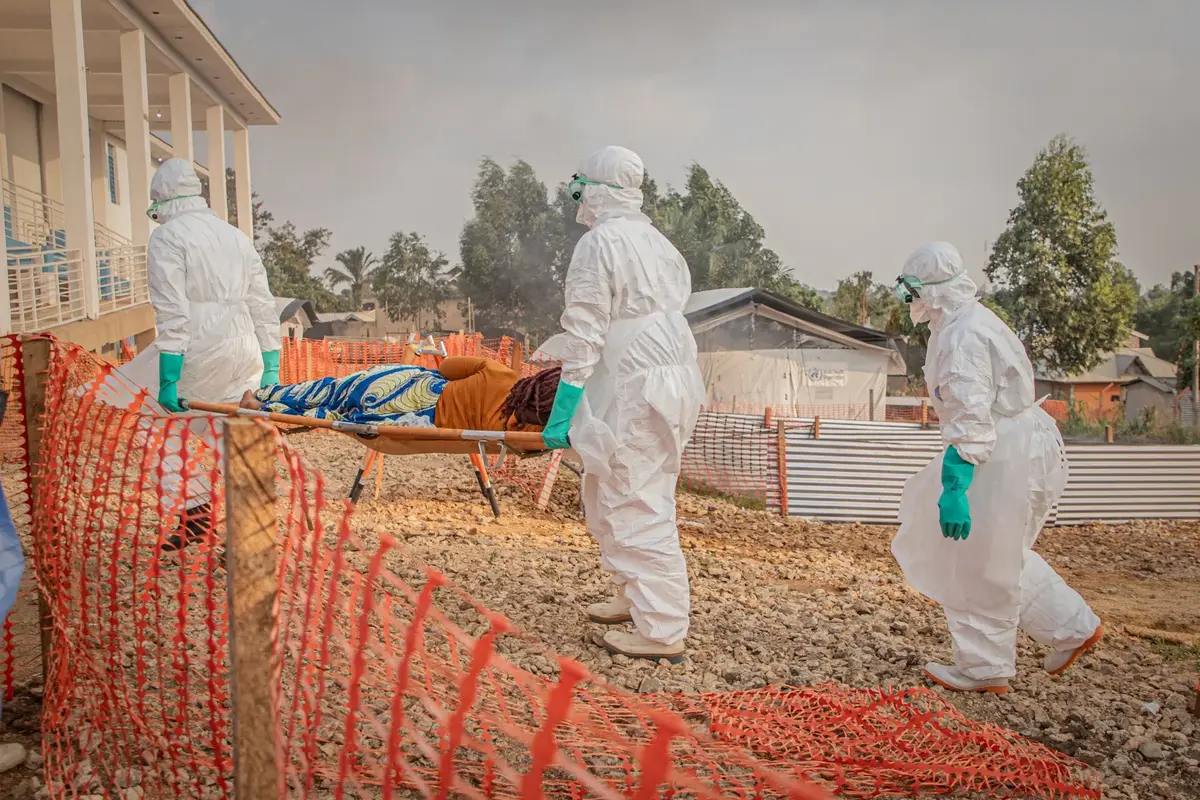
The Africa Centres for Disease Control and Prevention (Africa CDC) says the outbreak is still not under control, as attacks on health workers, delayed salaries, shortages of essential supplies and gaps in disease surveillance continue to weaken the response.
More than 11,200 infections and 5,500 deaths have been reported since the outbreak was declared on May 15, according to figures from the Congolese government cited by Africa CDC Director-General Jean Kaseya.
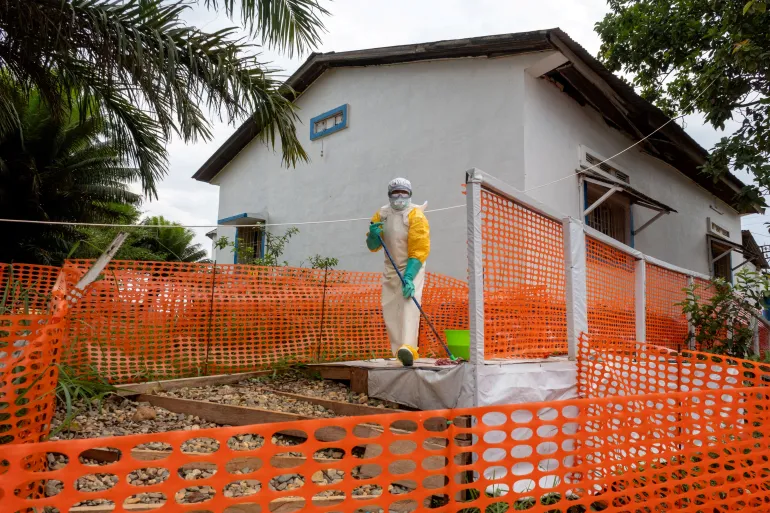
Kaseya, who spoke about the situation on November 15, warned that the outbreak could become the worst Ebola epidemic on record if it is not brought under control.
The current outbreak is caused by the Bundibugyo virus, a rare strain of Ebola. Its spread across several parts of the country has made the response increasingly difficult, particularly in communities affected by insecurity and displacement.
“We are all in agreement today to say that this outbreak is still serious, and is still not under control,” Kaseya said.
One of the most troubling signs is the number of infections being discovered outside the groups already identified by health authorities.
According to Kaseya, more than 80 per cent of new cases are emerging among people who were not on existing contact-tracing lists. This suggests that many infections are occurring beyond the reach of surveillance teams, making it harder to identify and isolate cases before the virus spreads further.
The location of many deaths presents another challenge. More than 65 per cent have occurred in communities outside health facilities, rather than among patients receiving treatment in hospitals or designated Ebola centres.
This matters because people with Ebola can become highly infectious as the illness progresses. When patients are not identified early and remain within their communities, family members, neighbours and others who care for them may be exposed.
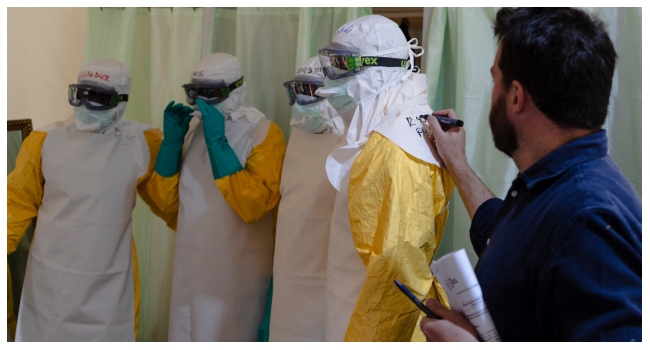
The World Health Organization (WHO) said on November 15 that more than 11,000 cases and 5,400 deaths had been reported. It also warned that between 400 and 500 new cases were still being recorded each week, with the outbreak affecting 67 health zones across eight provinces.
The figures reported by different agencies are not identical, reflecting differences in reporting and the timing of their updates. However, they point to the same conclusion: transmission remains widespread.
Insecurity and unpaid health workers weaken response
The outbreak is unfolding in areas where conflict and insecurity have made it dangerous for health workers to reach affected communities.
Attacks on medical teams and health facilities have disrupted operations, while displacement and difficult access routes have complicated efforts to investigate suspected cases, trace contacts and provide treatment.
The WHO reported that an attack in Cantine-Aloya killed 66 civilians, including three health workers. Three health facilities were also looted, while more than 1,000 contacts were lost to follow-up.
These incidents have consequences beyond the immediate loss of lives. When health workers cannot safely enter communities, suspected cases may go undetected and people who have been exposed to the virus may not receive timely monitoring.
Delayed payment of frontline workers is adding to the pressure. Kaseya said some workers had gone unpaid for months, while the Congolese government was working to digitise its payroll system to address the problem.
For a response that depends on surveillance officers, medical staff, laboratory workers and community health teams, unreliable payment can undermine the availability of the people needed to contain the disease.
Funding pledged, but shortages persist
The financial response has also come under scrutiny.
Kaseya said about $2.9 billion had been pledged for the Ebola response but urged international donors to release approximately $1.6 billion in promised funding.
He also called for better coordination between donors and the government in Kinshasa, warning that overlapping activities and poor cooperation could lead to resources being wasted while affected communities remain underserved.
The medical charity Médecins Sans Frontières has separately reported that assistance is still failing to reach some of the hardest-hit areas.
Its concerns include ambulances without fuel, inadequate numbers of surveillance teams and health workers who lack sufficient training.
These are practical gaps that can determine whether an outbreak is contained. An ambulance without fuel cannot transport a patient quickly. A shortage of surveillance officers can leave exposed contacts unmonitored. Limited training can weaken infection prevention and the safe handling of suspected cases.
The WHO says some progress has been made, including expanded laboratory capacity, treatment facilities and community health activities. However, it has warned that improvements in some locations should not be mistaken for control of the outbreak across the country.
Nigeria faces continuing preparedness demands
The outbreak also has implications for countries beyond the Democratic Republic of Congo, including Nigeria.
Nigeria recorded an imported case of Bundibugyo virus disease in October involving a Swiss citizen who was evacuated to Switzerland for treatment. The development prompted increased surveillance and monitoring by Nigerian health authorities.
In an update reported on November 11, the Nigeria Centre for Disease Control and Prevention said 34 of the 62 identified contacts had completed their 21-day monitoring period, while 28 remained under surveillance. No additional case had been recorded as of that update.
The WHO has continued to emphasise the need for cross-border surveillance, early detection, laboratory testing and preparedness in countries at risk.
For Nigeria, the challenge is to sustain those measures rather than treat the absence of additional reported cases as a reason to relax vigilance. Health authorities need to maintain the ability to identify suspected infections quickly, investigate contacts and respond to alerts at airports and other points of entry.
The WHO has also advised against blanket travel and trade restrictions, arguing that targeted, evidence-based public-health measures are more effective.
The scale of the crisis in Congo shows how quickly weaknesses in surveillance, access to healthcare and emergency coordination can undermine an outbreak response.
Until health workers can reach affected communities safely, patients are identified early and promised resources reach the areas where they are needed, the virus will continue to find opportunities to spread.








Leave a comment