


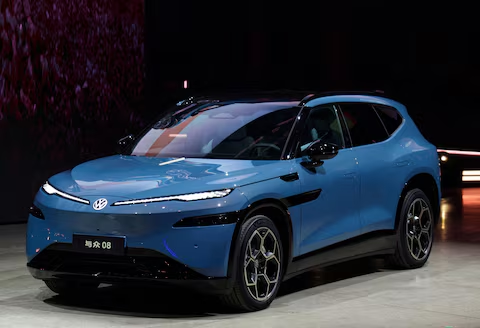
Volkswagen’s efforts to regain ground in China’s electric vehicle market are facing another setback, with its joint venture in the country reportedly planning no new models for 2027 and 2028.
The decision leaves Volkswagen Anhui relying on its existing ID. UNYX range at a time when competition from Chinese electric vehicle manufacturers is intensifying and demand for its models remains below expectations.
People familiar with the matter said management had considered introducing a new crossover SUV in 2028 but suspended the plan. The venture believes its current four-model line-up can sustain the brand through the next two years.
However, sales figures suggest the strategy faces significant challenges. Volkswagen Anhui sold 11,360 ID. UNYX vehicles between January and September 2026, considerably below the targets needed to support its ambitious growth plans.
An internal document reviewed by Reuters indicates that the venture aims to sell 128,000 ID. UNYX vehicles in 2027, despite its relatively weak sales performance so far.
Volkswagen has also turned to partnerships with Chinese technology and automotive companies, including Xpeng, to improve its competitiveness and accelerate the development of electric vehicle platforms.
The pressure comes as Chinese manufacturers such as BYD continue to strengthen their position through competitive pricing, faster product development and advances in vehicle technology.
Volkswagen’s wider performance in China has also weakened. The company sold more than 1.3 million vehicles in the country during the first nine months of 2026, a 30% decline from the same period in 2025.
Its Anhui joint venture, established with Chinese automaker JAC, remains unprofitable despite Volkswagen holding a 75% stake. The company expects the business to reach break-even by 2030.
Volkswagen China said it was concentrating on expanding its dealership network, improving its existing product range and maintaining sustainable growth. It also reaffirmed plans to introduce 30 new energy vehicle models in China by 2029.
The developments underline the growing difficulties facing traditional automakers in China, where maintaining market share increasingly depends on rapid innovation, competitive pricing and the ability to respond quickly to changing consumer preferences.









Leave a comment