


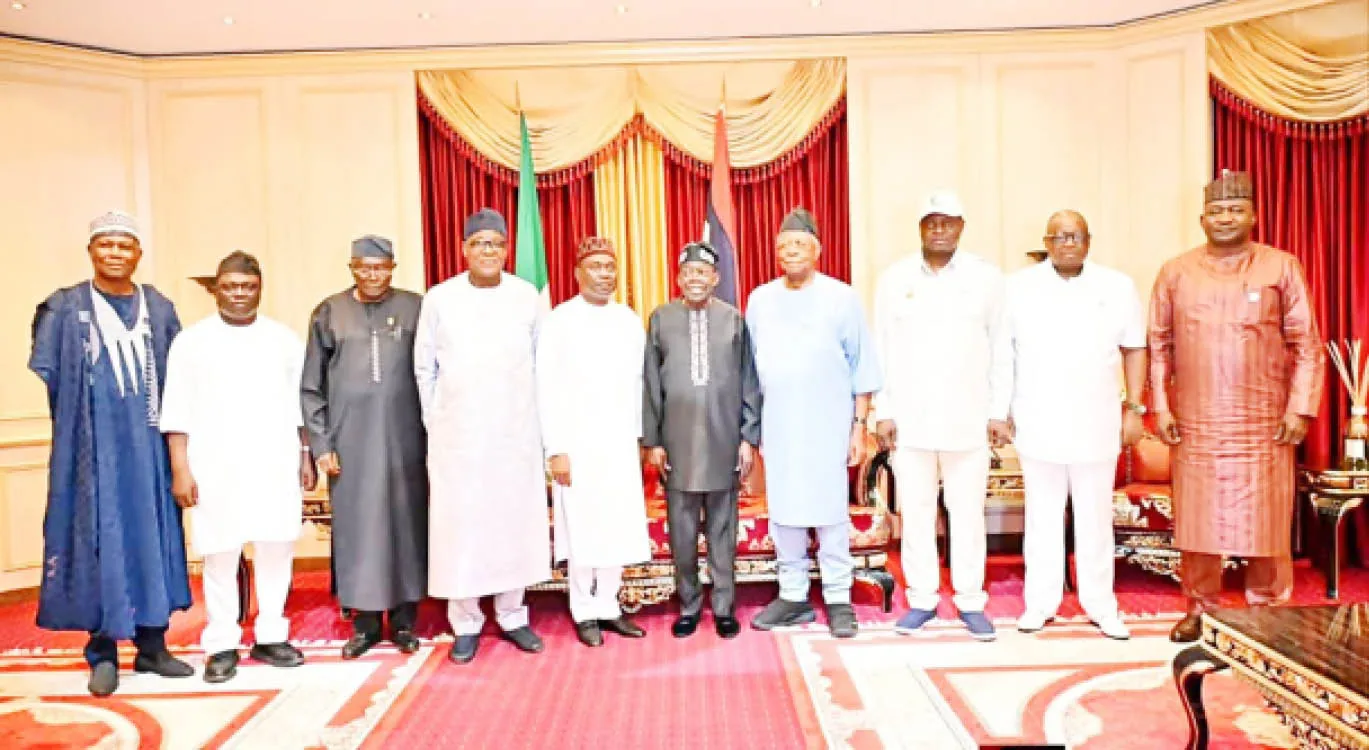
The recent visit by some prominent Middle Belt leaders to President Bola Tinubu at the Presidential Villa, Abuja, has sparked controversy over regional representation, religious inclusion and political unity ahead of the 2027 general elections.
The delegation, led by former Minister of Defence, General Theophilus Yakubu Danjuma, met with the President on Friday, November 6, to discuss issues affecting the region, including security, economic development and political cooperation.
However, the composition of the delegation has generated reactions from political stakeholders and religious organisations, particularly over the absence of Muslim representatives.
Those who attended the meeting included Plateau State Governor, Caleb Mutfwang, Taraba State Governor, Agbu Kefas, Minister of Defence, General Christopher Musa, former Speaker of the House of Representatives, Yakubu Dogara, former Chief of Army Staff, General Ishaya Bamaiyi, businessman Thomas Etuh and President of the Middle Belt Forum, Dr Poju Bitrus.
Speaking after the meeting, Dogara said the visit was intended to demonstrate solidarity with President Tinubu and discuss ways of mobilising political support for his administration.
He acknowledged that some communities in the region continued to experience security challenges but maintained that considerable improvements had been recorded.
He also attributed some of the progress to strategic appointments of people from affected communities into government positions.
Plateau State Governor, Caleb Mutfwang, said regional leaders were working to rebuild trust and strengthen relationships among communities divided along ethnic and religious lines.
He disclosed that young people from different religious backgrounds were increasingly engaging in conversations aimed at promoting peaceful coexistence and reconciliation.
However, the meeting has attracted criticism from groups and individuals who questioned whether the delegation adequately represented the religious and ethnic diversity of the Middle Belt.
The Arewa Consultative Forum, through its spokesman, Professor Tukur Baba, acknowledged the right of individuals to associate and engage political leaders but expressed concern that the delegation appeared to represent a particular religious persuasion.
He warned that such engagements could raise questions about national unity if they were perceived as excluding other sections of the region.
Similarly, Jama’atu Izalatil Bid’a Wa’ikamatis Sunnah (JIBWIS) described the visit as potentially divisive, insisting that Muslims and Christians should be equally recognised in engagements presented as representing the entire region.
The organisation’s National Publicity Secretary, Sheikh Ahmad Ashir, said the Middle Belt belonged to people of different religious backgrounds and urged its leaders to speak with one voice.
Meanwhile, political analyst and lecturer at Bayero University Kano, Dr Sa’idu Ahmad Dukawa, warned that the development could deepen religious and political divisions if the delegation claimed to represent the entire region without broad-based representation.
He argued that there was nothing wrong with Christian leaders visiting the President, provided they identified themselves accordingly, adding that Muslim leaders also had the right to organise similar engagements.
The President of the Middle Belt Forum, Dr Poju Bitrus, was reportedly invited to join the meeting, while the forum’s spokesman, Luka Binniyat, clarified that the organisation did not organise the visit or select the delegation.
He explained that the meeting was initiated by Danjuma and that the forum was informed shortly before the engagement.
The controversy comes amid increasing political activities ahead of the 2027 general elections, with regional stakeholders seeking greater influence in national political decisions.


Leave a comment