


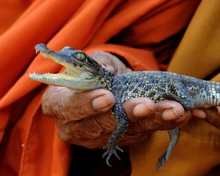
Cambodia has formally designated a 315-hectare wetland in the Cardamom Mountains as a genetic conservation area, strengthening efforts to protect one of the world’s last significant wild populations of the critically endangered Siamese crocodile.
The protected site in Pursat province is believed to support at least 40 wild Siamese crocodiles and is considered particularly important because genetically pure populations of the species have become increasingly rare following decades of habitat destruction, hunting, poaching and cross-breeding with farmed crocodiles.
Indigenous Chorng communities have played a central role in the conservation effort. Their knowledge of the wetlands helped researchers rediscover the species in Cambodia in 2000, after conservationists had feared it had disappeared from the country.
Community wardens now monitor crocodile populations, identify nesting sites, patrol against illegal fishing and poaching, and report threats to authorities.
Conservation breeding has also helped strengthen the population. Since 2011, hundreds of crocodiles have been bred and released into protected areas. In 2024, five wild nests containing 106 eggs were recorded in the Cardamom Mountains, producing 60 hatchlings.
The new conservation area is intended to preserve genetic diversity and provide a secure habitat where the species can continue breeding and potentially support recovery efforts in other parts of Southeast Asia.






Leave a comment