


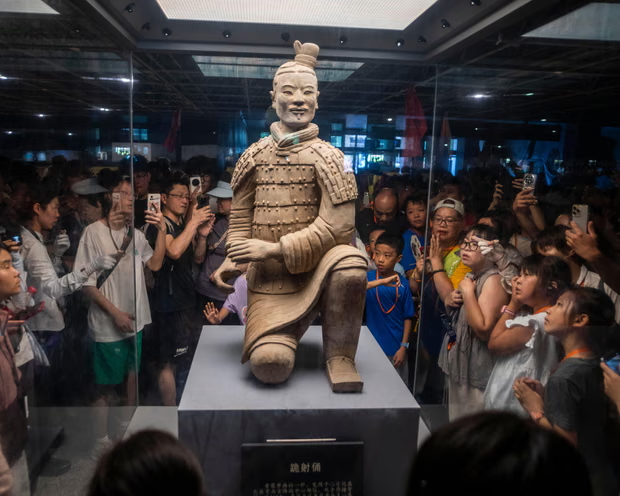
A journey through China has prompted a deeper reflection on the country’s Tang dynasty, as a Chinese-born writer travelled with her 11-year-old daughter to explore a period widely regarded as one of the country’s great cultural and intellectual eras.
The Tang dynasty, which lasted from the seventh to the early 10th century, was marked by advances in science, medicine, literature, art, printing, urban development and cuisine. Its cities also became important centres of international trade and cultural exchange along the Silk Road.
The journey took the mother and daughter through historic cities including Xi’an and Luoyang, where they encountered ancient monuments, Buddhist grottoes, imperial tombs and the remains of past dynasties.
For the writer, however, the trip was about more than sightseeing. It became an attempt to reconnect with a heritage she had left behind and to help her daughter, who was raised in England, understand her Chinese background.
The experience also highlighted the contrast between China’s ancient cultural legacy and its rapidly modernising cities. Historic sites now exist alongside high-speed railways, skyscrapers and vast urban infrastructure.
The journey ultimately became an exploration of how history shapes identity, how cultural memory is passed between generations and why the achievements of the Tang era continue to fascinate people centuries later.








Leave a comment