



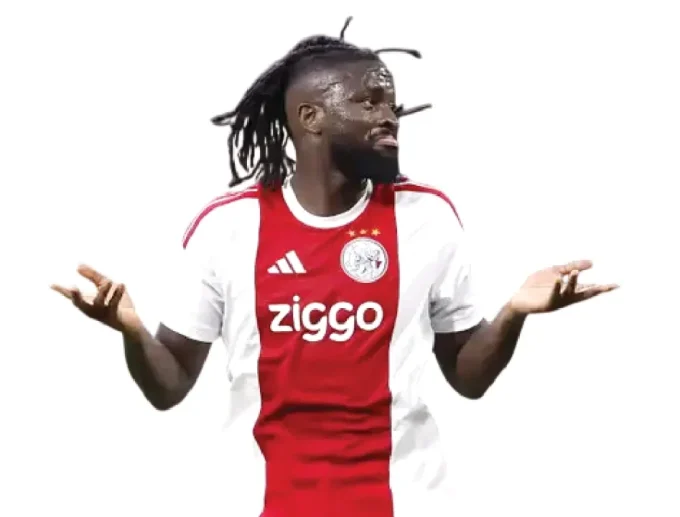
Gift Orban’s impressive start to the Turkish Super Lig season has reignited discussions about his international future, with the Amedspor striker currently joint-top of the league’s scoring chart on seven goals.
The 24-year-old is level with Trabzonspor’s Mohamed Salah, while fellow Nigerian striker Victor Osimhen has six goals. Despite his strong form, however, Orban’s unresolved international eligibility situation continues to complicate his prospects with the Super Eagles.
Orban’s last involvement with Nigeria came in 2023 after then-Super Eagles coach José Peseiro handed him his first call-up for the final 2023 Africa Cup of Nations qualifier against São Tomé and Príncipe.
Although he trained with the squad, Orban did not feature in the match, with the Nigeria Football Federation initially attributing his absence to injury.
Reports subsequently emerged that the NFF had received a petition from the Togolese Football Federation questioning Orban’s eligibility to represent Nigeria. No publicly available official record has substantiated that allegation, while Orban has repeatedly denied ever representing Togo.
The situation is linked to Orban’s background. Born in Benue State to a Nigerian father and Togolese mother, the striker has connections to both countries and spent parts of his upbringing in Nigeria and Togo.
His football journey began after he was spotted at a tournament in Nigeria by agent Emefie Atta Aneke, who helped facilitate his move into professional football.
An NFF source said the federation had adopted a cautious approach because of the uncertainty surrounding the matter.
“It was more of caution. He is a good player but the federation could not afford to take chances,” the source said.
Orban has not been capped by Togo at senior level, although reports have claimed that the eligibility issue has since been resolved. That claim could not be independently verified through FIFA’s Change of Association Platform.
Orban has also previously made his preference clear, insisting that he wants to represent Nigeria rather than Togo.
“I never wanted to play for Togo,” he said in 2023, adding that his father is from Taraku in Benue State while his mother is Togolese.
FIFA’s updated eligibility framework outlines requirements concerning nationality, descent, residence and previous international participation. Where a genuine link is required, holding a country’s nationality alone may not be sufficient, with birth, descent or residence potentially forming part of the eligibility assessment.
For now, Orban’s goalscoring form in Turkey has placed his name back in the conversation, but questions over his eligibility remain an important part of his international future.








Leave a comment