


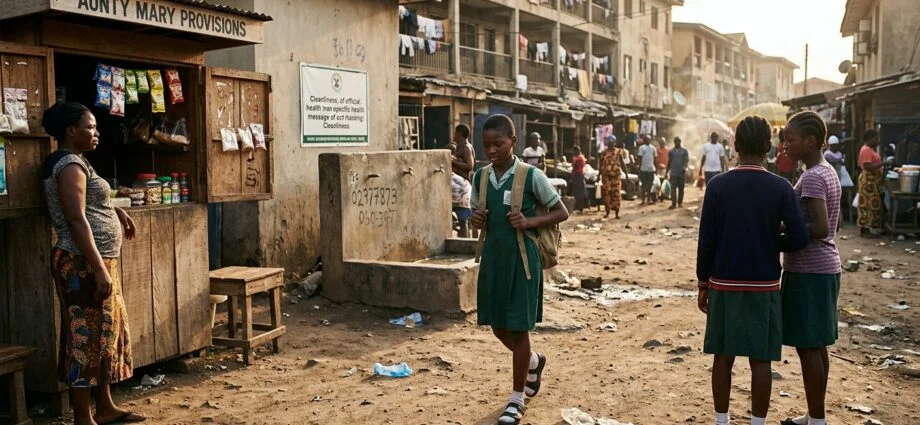
For many girls in low income communities, menstruation has become a monthly struggle due to the high cost of sanitary products, inadequate water facilities and the stigma surrounding periods.
The situation often forces schoolgirls to rely on old rags, tissue, newspapers and other unhygienic materials, exposing them to discomfort, infections and loss of dignity.
According to the News Agency of Nigeria, Dr Chukwubundom Nwobodo, an Obstetrics and Gynaecology Medical Officer at General Hospital, Ebute Meta, described period poverty as inadequate access to menstrual products, clean water, private toilets, waste disposal facilities and menstrual health education.
Nwobodo said the problem could negatively affect girls’ physical health, education and mental wellbeing, with many missing school because of pain, fear of leakage or lack of suitable menstrual products.
He warned that prolonged use of unclean materials could cause vaginal irritation, rashes, sores, fungal infections and urinary or reproductive tract infections, while untreated infections could potentially affect reproductive health.
The medical officer also noted that the fear of embarrassment and teasing could lower girls’ confidence, cause anxiety and discourage them from participating fully in classroom activities.
To address the problem, Nwobodo called for free or subsidised sanitary products in public schools and health centres, improved water, sanitation and hygiene facilities, and menstrual health education for both girls and boys.
He also urged schools to provide private toilets with clean water and disposal facilities, while encouraging parents to discuss menstruation openly with their children.
Nwobodo further called for an end to cultural taboos and stigma surrounding menstruation, stressing that periods are a normal and healthy part of female development and should not be treated as a source of shame.










Leave a comment