


By Benson Daniel
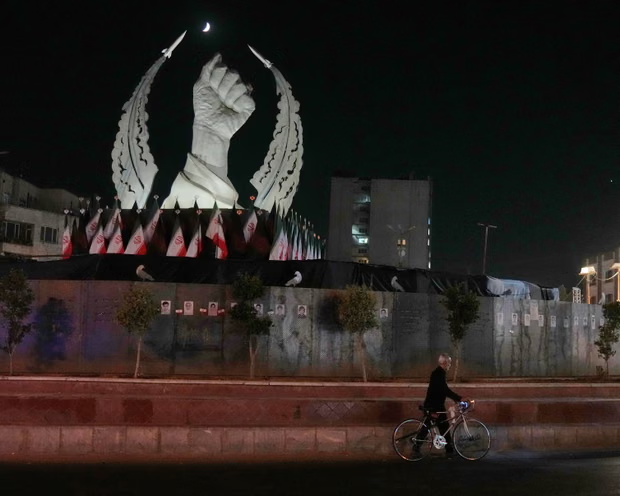
Tensions in the Middle East have escalated sharply after Iran warned that not a “single drop” of oil or natural gas would be allowed to pass through the strategic Strait of Hormuz if hostilities with the United States continue, following another night of American military strikes in the region.
The latest warning came as the United States carried out its ninth consecutive night of military operations targeting facilities and positions linked to Iran-backed groups. The sustained campaign has heightened fears of a broader regional conflict that could have significant consequences for global energy markets and international security.
Iranian officials described the continued US strikes as a violation of international norms and reiterated that the country reserves the right to respond if its national interests or territorial integrity are threatened. The remarks have intensified concerns over the security of the Strait of Hormuz, one of the world’s most critical maritime oil transit routes.
The Strait of Hormuz connects the Persian Gulf to the Gulf of Oman and the Arabian Sea, with a substantial share of the world’s crude oil and liquefied natural gas exports passing through the narrow waterway each day. Any disruption to shipping in the area could significantly affect global energy supplies and trigger sharp increases in international oil prices.
Energy market analysts warned that prolonged tensions in the region could create uncertainty for global crude oil markets, increase transportation costs and place additional pressure on economies already facing inflationary challenges. Insurance premiums for commercial vessels operating in the Gulf could also rise if security risks continue to increase.
Governments and international organisations have called for restraint from all parties, urging renewed diplomatic engagement to prevent further escalation. Several countries have emphasised the importance of maintaining freedom of navigation through international waterways and ensuring the uninterrupted flow of global energy supplies.
Security experts note that while Iran has previously threatened to restrict access to the Strait of Hormuz during periods of heightened tension, any attempt to block the waterway would likely provoke a strong international response given its strategic importance to global trade.
As military operations continue and diplomatic efforts remain fragile, global markets are closely monitoring developments in the Gulf. Analysts say the coming days will be critical in determining whether tensions can be contained or evolve into a wider regional confrontation with far-reaching economic and geopolitical consequences.







Leave a comment