


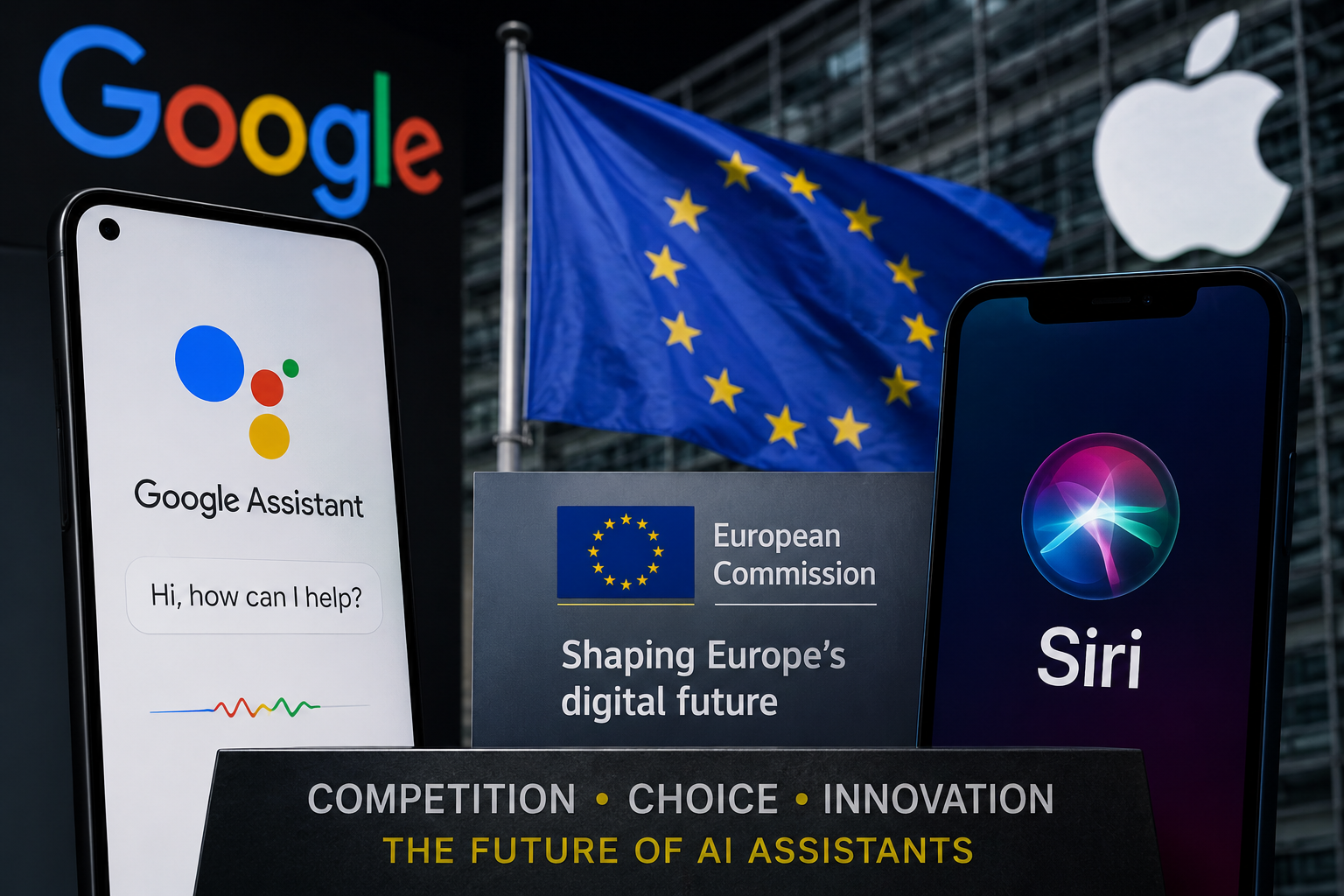
Google and Apple are facing growing regulatory pressure from the European Union over the future of artificial intelligence (AI) assistants, as the bloc pushes for stricter competition rules and greater consumer choice in the rapidly evolving technology sector.
The dispute centers on how AI powered assistants are integrated into smartphones and digital ecosystems. EU regulators are seeking measures that would allow consumers to choose alternative AI assistants instead of being limited to default options offered by major technology companies.
The European Commission argues that increasing interoperability and user choice is essential to promoting competition and preventing dominant firms from strengthening their market positions through AI services.
Google and Apple, however, have raised concerns that some of the proposed requirements could undermine security, compromise user privacy, and make it more difficult to deliver seamless experiences across their devices and platforms.
The disagreement comes as AI assistants become increasingly central to smartphones, enabling users to perform tasks such as answering questions, managing schedules, controlling smart home devices, and generating content using advanced artificial intelligence.
The European Union has been at the forefront of regulating large technology companies through legislation such as the Digital Markets Act and the AI Act, both of which aim to promote fair competition while ensuring AI systems are developed and deployed responsibly.
Industry analysts say the outcome of the dispute could shape how AI assistants operate in Europe and influence global standards for digital competition, consumer choice, and AI regulation.











Leave a comment