


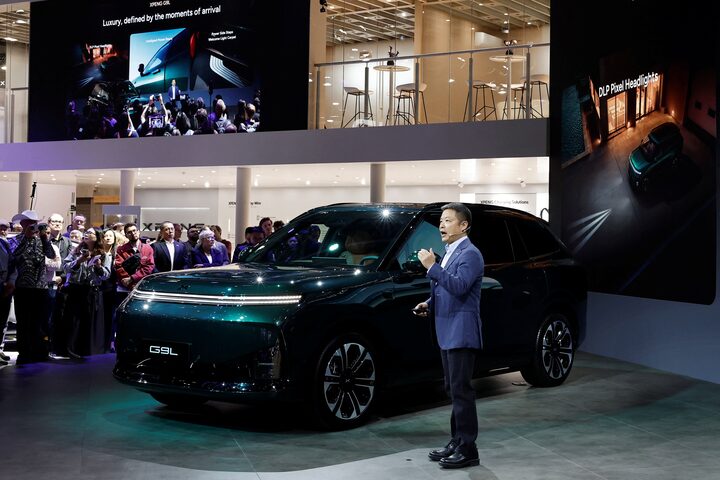
Chinese automakers are expanding their manufacturing operations in Europe as the European Union considers new local-content requirements aimed at strengthening domestic industry and reducing reliance on imported products.
The proposed rules, being developed under the EU’s Industrial Accelerator Act, would link certain public support and procurement opportunities to products manufactured within Europe. However, disagreements remain over which countries should qualify and how much of a vehicle’s production must take place within the region.
Chinese manufacturers are already adjusting their strategies to prepare for the potential changes. Changan Automobile, Xpeng, Chery and GAC are among the companies pursuing European manufacturing facilities and supply-chain partnerships.
Changan plans to begin European vehicle production as early as 2027, targeting annual capacity of 180,000 vehicles by 2028 and 350,000 by 2030.
Establishing factories within Europe could help Chinese companies maintain access to the market, reduce exposure to import restrictions and strengthen their relationships with local suppliers.
However, the proposed rules have raised concerns about the treatment of countries outside the EU, particularly Britain, Turkey and Morocco, which are closely connected to European automotive supply chains.
Turkey’s automotive industry, for example, supports substantial employment linked to European vehicle production. Excluding such countries from local-content calculations could complicate existing manufacturing arrangements and increase costs.
The debate comes as European carmakers face growing competition from Chinese manufacturers, whose competitively priced vehicles have gained ground across the region.
For European policymakers, the challenge is to protect local manufacturing and jobs without undermining investment, supply-chain efficiency or consumer choice.










Leave a comment