


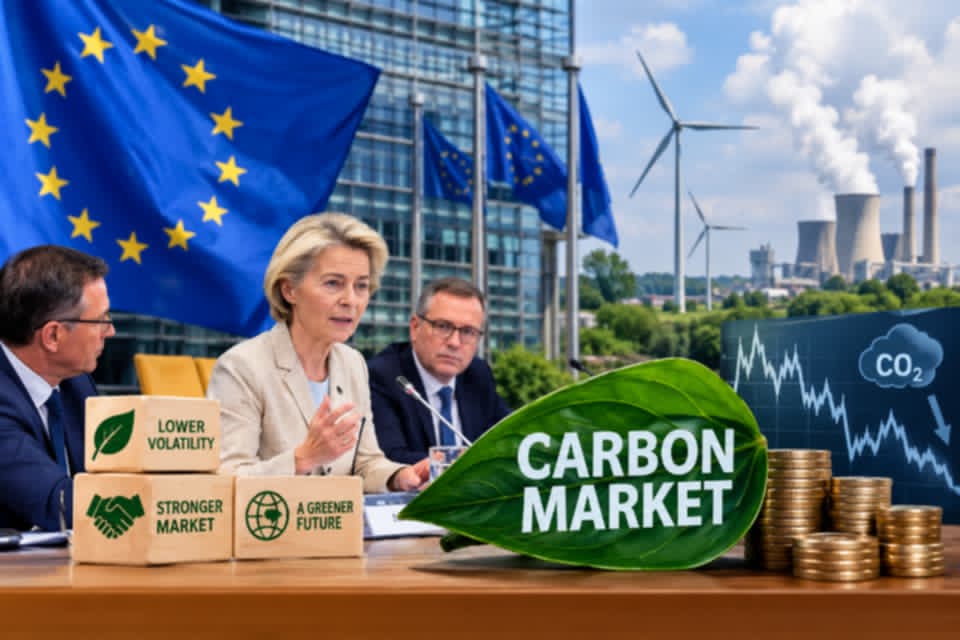
European Union countries have backed changes to the bloc’s carbon market aimed at reducing sharp price increases and providing greater stability for businesses and consumers.
The agreement focuses on adjustments to the EU’s emissions trading system, which requires companies in covered sectors to obtain allowances for their greenhouse-gas emissions. EU diplomats said the changes are intended to make the system more responsive when carbon prices rise rapidly.
The move comes as European governments face renewed pressure over energy costs. The European Commission has acknowledged that the 2026 energy crisis has caused a sharp increase in fossil-fuel prices, affecting households and businesses across the bloc.
The European Parliament has also backed stronger safeguards against carbon-price fluctuations under the EU’s forthcoming ETS2 system, which will cover emissions from buildings and road transport. Its proposals include mechanisms for releasing allowances from a reserve when prices rise significantly.
Separately, EU governments recently agreed to increase free carbon allowances for energy-intensive industries considered vulnerable to competition from countries with less stringent climate rules. The measure is expected to provide billions of euros in cost savings for affected sectors.
The latest reforms reflect the EU’s effort to balance its climate targets with concerns over industrial competitiveness and energy costs.










Leave a comment