


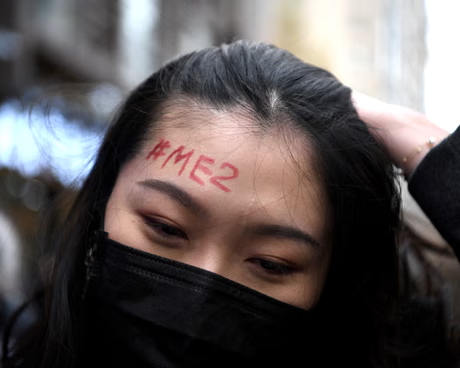
China’s #MeToo movement has changed significantly in recent years, with feminist activists increasingly moving their activities away from public platforms as censorship and restrictions on civil society intensify.
The movement initially gained wider attention after journalists and activists, including Sophia Huang Xueqin, helped bring allegations of sexual harassment and abuse into public discussion. Huang was released from prison on September 18 after serving a five-year sentence, returning to a feminist movement that has become far less visible during her absence.
Activists now often organise discussions and events privately or present them as cultural and artistic activities rather than openly feminist gatherings. Online campaigns using #MeToo and related Chinese-language terms have also largely disappeared from major social media platforms.
Researchers and activists say feminist groups have developed new ways of communicating to avoid automated censorship. Some use alternative language and private networks to discuss sexual harassment, women’s rights and support for survivors.
The restrictions have also affected a younger generation of activists, with concerns that censorship has limited their access to information about earlier feminist campaigns and struggles.
Despite the reduced public space, activists say the movement has left a lasting impact. Discussions about sexual harassment became more prominent in Chinese society, while some universities introduced policies addressing sexual misconduct.
Huang’s own case remains closely watched. She was arrested in 2021 alongside labour activist Wang Jianbing and convicted in 2024 of “inciting subversion of state power.” She was also given an additional four-year deprivation of political rights, which rights organisations say could restrict her ability to work as a journalist and participate freely in public life.
China’s government maintains that the country has made significant progress on women’s rights and has pledged further action against sexual harassment and violence.
For activists, however, the future of feminism in China increasingly depends on finding ways to continue supporting women and survivors without attracting government intervention.









Leave a comment