


By Benson Daniel
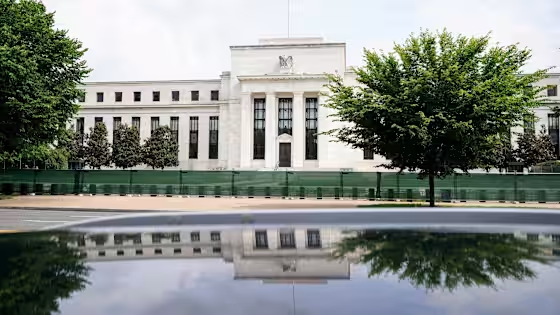
A strong majority of leading US academic economists are calling on the Federal Reserve to raise interest rates as persistent inflation continues to run above the central bank’s target, putting monetary policymakers on a collision course with President Donald Trump, who has repeatedly demanded lower borrowing costs.
A survey conducted by the University of Chicago Booth School of Business found that 50 of 51 leading economists supported an increase in the Federal Reserve’s benchmark interest rate. A quarter-point increase was the most widely supported option, while some economists favoured a larger hike.
The Federal Reserve’s benchmark federal funds rate is currently in the 3.5% to 3.75% range. Inflation, measured by the personal consumption expenditures price index, has risen to 3.7%, remaining well above the Fed’s 2% target.
Economists supporting a rate increase point to continued inflationary pressure from higher energy prices, tariffs and strong investment associated with the artificial intelligence boom. The combination has raised concerns that price pressures could become more persistent if monetary policy remains too loose.
Trump, however, has continued to argue for lower interest rates, describing current borrowing costs as excessive. His position reflects a desire for cheaper credit that could support economic activity and reduce financing costs across the economy.
The disagreement has placed renewed attention on the Federal Reserve’s independence. The central bank is legally responsible for setting monetary policy based on economic conditions, particularly its mandates relating to employment and price stability.
The decision also represents a major test for Fed Chair Kevin Warsh, who was nominated by Trump and is now facing his first major policy decision at the helm of the central bank. Warsh indicated in August that rates could need to rise if inflation failed to show convincing signs of easing.
Financial markets have been preparing for a possible quarter-point increase, which would be the first Fed rate hike since July 2023. Market pricing had put the probability of a September increase above 90% ahead of the decision.
Higher US interest rates could have consequences well beyond American consumers and businesses. An increase could strengthen the dollar, raise global borrowing costs and influence the flow of international capital, particularly into emerging and developing economies.
For Nigeria and other African economies, changes in US interest rates can affect portfolio investment, exchange rates, external borrowing costs and the attractiveness of domestic assets relative to dollar-denominated investments.
Investors are therefore watching not only the rate decision but also Warsh’s guidance on what comes next. If inflation remains elevated, markets will be looking for indications of whether further increases could follow.
The Fed’s decision comes at a particularly sensitive moment, with rising oil prices and geopolitical disruptions adding another layer of uncertainty to the global inflation outlook.









Leave a comment