


By Benson Daniel
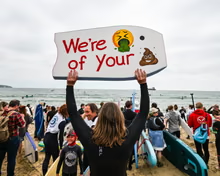
Green Party peer Jenny Jones has refused to pay the sewage portion of her Thames Water bill, accusing the company of failing to protect Britain’s rivers and coastlines from pollution.
Jones said she had decided to withhold the sewage charge after becoming increasingly frustrated by the continued discharge of raw sewage into waterways and what she described as years of inadequate investment in the country’s water infrastructure.
She said she was willing to pay for the water supplied to her home but would not accept paying the part of the bill covering sewage services while pollution remained a persistent problem.
Thames Water rejected the idea of splitting bills in that way, telling her that its charges were not calculated separately between water supply and sewage treatment. The dispute was followed by penalty charges and warnings over the unpaid amount.
The intervention comes at a difficult time for Britain’s water industry, with sewage pollution again under intense public and political scrutiny.
Figures released this year show that suspected illegal dry weather sewage discharges across England and Wales rose sharply in the first five months of 2026. Such discharges are particularly concerning because they occur without the heavy rainfall that normally causes combined sewer systems to overflow.
Thames Water has faced repeated criticism over its environmental performance, alongside mounting financial problems. The company is carrying a substantial debt burden and is seeking additional funding to remain financially stable while meeting the enormous cost of upgrading ageing infrastructure.
The dispute has also revived the argument over whether Britain’s water companies should remain privately owned.
Jones argues that the current system has failed to deliver adequate protection for the environment and believes the companies should ultimately return to public ownership. She has questioned government estimates of the cost of bringing the industry back under public control.
Her position reflects a wider public debate over whether customers should continue paying higher bills while water companies struggle with debt and face criticism over investment and pollution.
Thames Water is responsible for supplying water and managing wastewater services for millions of customers across London and parts of southern England. Its financial difficulties have become serious enough to trigger discussions about placing the company into a special administration regime, which would provide temporary public control if it became unable to meet its obligations.
A senior Conservative MP, Sir Geoffrey Clifton Brown, has also called for Thames Water to be placed under such a regime, arguing that customers should be protected from the company’s financial problems and creditor demands.
Prime Minister Andy Burnham has previously expressed support for greater public control of essential services, although his government has yet to settle on a final long term ownership model for Thames Water.
For Jones, however, the issue is not simply about ownership. She argues that those responsible for environmental failures should face stronger consequences and that companies must be made to account for damage caused to rivers and coastal waters.
Her decision to withhold the sewage element of her bill could expose her to further penalties and legal action. She acknowledged those risks but said she was prepared to defend her position.
The protest adds another voice to a growing campaign for tougher action against water companies as Britain confronts worsening concerns over sewage pollution, ageing infrastructure, rising bills and the financial sustainability of the privatised water sector.







Leave a comment