


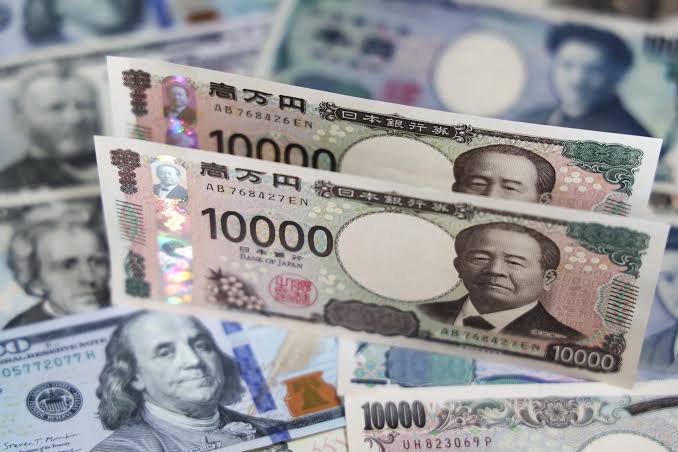
Japan spent a record 15.4 trillion yen ($96.5 billion) intervening in foreign exchange markets over the past month to support the yen, according to Finance Ministry data released Friday.
The scale of the intervention highlights Tokyo’s determination to strengthen the currency after it fell to a four-decade low near 164 yen per dollar. A weak yen has increased import costs, particularly for energy, while also putting pressure on Japanese consumers and businesses.
The intervention covered the period from July 30 to August 26. Japanese authorities bought yen on July 30 and 31, including rare coordinated action with the United States, as the currency came under heavy selling pressure.
Earlier data from the Bank of Japan (BOJ) suggested that the July 30 intervention may have amounted to as much as 9.6 trillion yen, potentially making it the largest single-day intervention on record.
The yen initially strengthened from around 163 per dollar to about 155.20 by August 3, before weakening again and later stabilising around 159.50.
Japan’s currency has remained under pressure partly because the BOJ has raised interest rates relatively slowly, leaving Japanese borrowing costs well below those in the United States. This has encouraged investors to continue using the yen as a cheap source of funding for global investments.
Markets currently see a 65% probability of a BOJ rate increase in September, after policymakers signalled that they may accelerate monetary tightening.
Japan’s reliance on imported energy adds to the government’s concern over yen weakness. The country imports almost all of its energy, with about 95% of those imports coming from the Middle East, leaving it vulnerable to supply disruptions linked to the conflict involving Iran.
The United States has also indicated that Japan could draw on a Federal Reserve liquidity facility created during the COVID-19 pandemic to support its intervention efforts without having to sell large amounts of U.S. Treasury securities.
U.S. Treasury Secretary Scott Bessent has said Washington will do “whatever it takes” to support Japan’s efforts to stabilise the yen, warning that a substantially undervalued currency could create wider economic problems and encourage competitive currency devaluations.
The latest figures underline the challenge facing Tokyo: intervention can temporarily strengthen the yen, but sustained recovery is likely to depend on monetary policy, interest rate differentials and broader market confidence.











Leave a comment