


By Benson Daniel
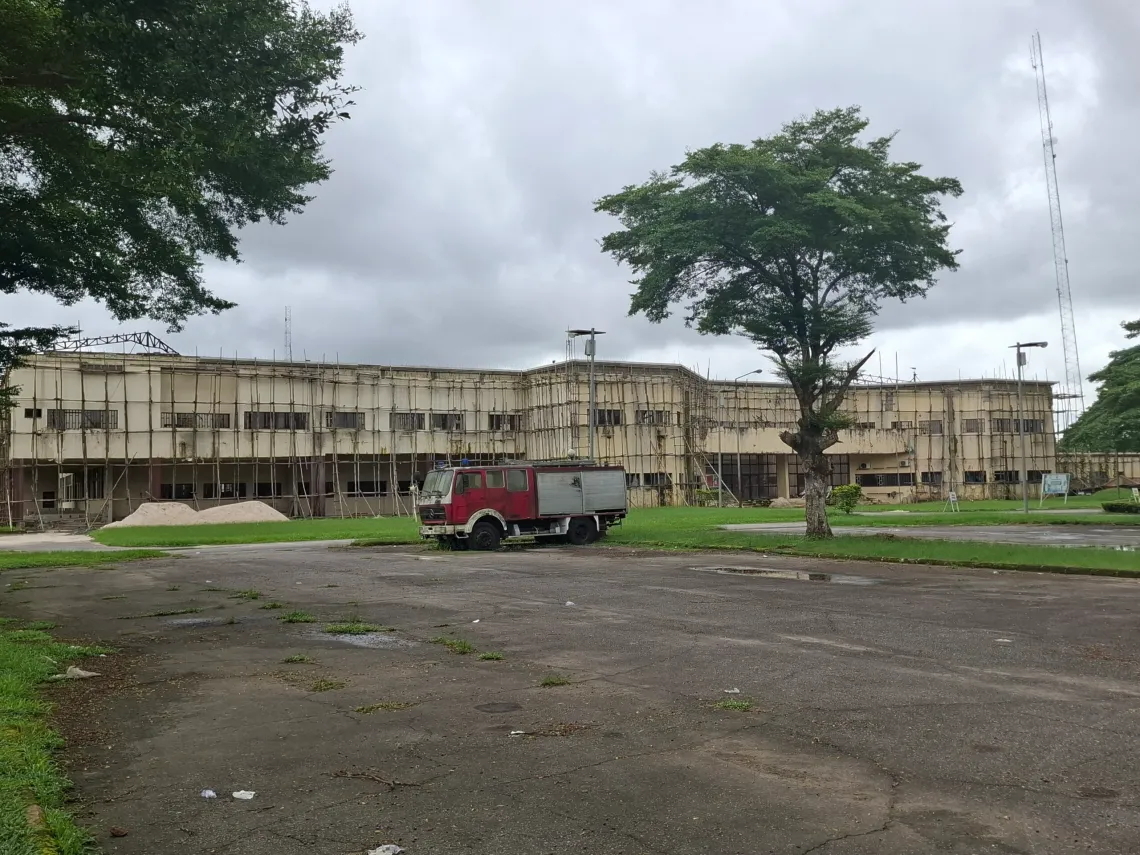
The rehabilitation of the Akwa Ibom State House of Assembly complex has come under renewed scrutiny following reports that work on the multi billion naira project has stalled, while the state government continues to prioritise major tourism and infrastructure projects across the state.
The Assembly complex was earmarked for extensive rehabilitation and remodelling after Governor Umo Eno expressed concern about its condition and promised to undertake improvements. Budget documents indicate that a combined N15.47 billion was approved for the project across the 2025 and 2026 fiscal years.
Lawmakers and Assembly staff were moved out of the complex in October 2025 to allow the rehabilitation work to proceed. The contractor was expected to complete the project within six months, a timeline that elapsed in April 2026.
However, an inspection of the complex later showed limited activity at the site, with the project yet to be completed. The prolonged delay has left the legislature operating from temporary locations while questions continue to be raised about the implementation of the rehabilitation programme.
The project has also attracted concerns over transparency, particularly regarding procurement information, the identity of the contractor and the extent of work completed.
The development has created an unusual contrast within the state’s infrastructure programme as the administration continues to push investment in tourism as part of its strategy to diversify the economy and generate additional economic opportunities.
Governor Eno said in his 2026 New Year address that tourism would remain a major component of the state’s economic diversification strategy. He listed several projects, including the ARISE Palm Resort, the 5,000 capacity Ibom International Convention Centre, the 200 bed Ibom Hotels in Uyo, ARISE Shopping City and the rehabilitation of the Ibom Hotels and Golf Resort.
The administration has also linked tourism development to broader efforts to strengthen the state’s hospitality, entertainment and investment sectors.
The Governor’s programme includes efforts to position Akwa Ibom as a destination capable of attracting domestic and international visitors while creating opportunities for businesses operating within the hospitality and tourism value chain.
The state government has also continued to invest in road infrastructure and other facilities intended to support economic activity across the state. In his New Year address, Eno said more than 1,000 kilometres of roads had either been completed or were ongoing, while promising that additional projects would be executed across the state’s local government areas.
For the State House of Assembly, however, the unfinished rehabilitation remains a pressing concern because the complex serves as the permanent headquarters of the state legislature.
The prolonged relocation has also raised questions about the additional cost associated with maintaining temporary facilities while the permanent complex remains unavailable.
The situation has therefore placed renewed attention on the need for transparency, effective project supervision and timely completion of publicly funded infrastructure.
While tourism investments could support economic diversification and create new opportunities for the state, stakeholders are also expected to demand accountability for existing projects and ensure that approved public funds translate into completed infrastructure.
The administration’s ability to balance new development initiatives with the completion of delayed projects will remain an important measure of its infrastructure delivery strategy as it moves deeper into its current tenure.








Leave a comment