


By Benson Daniel
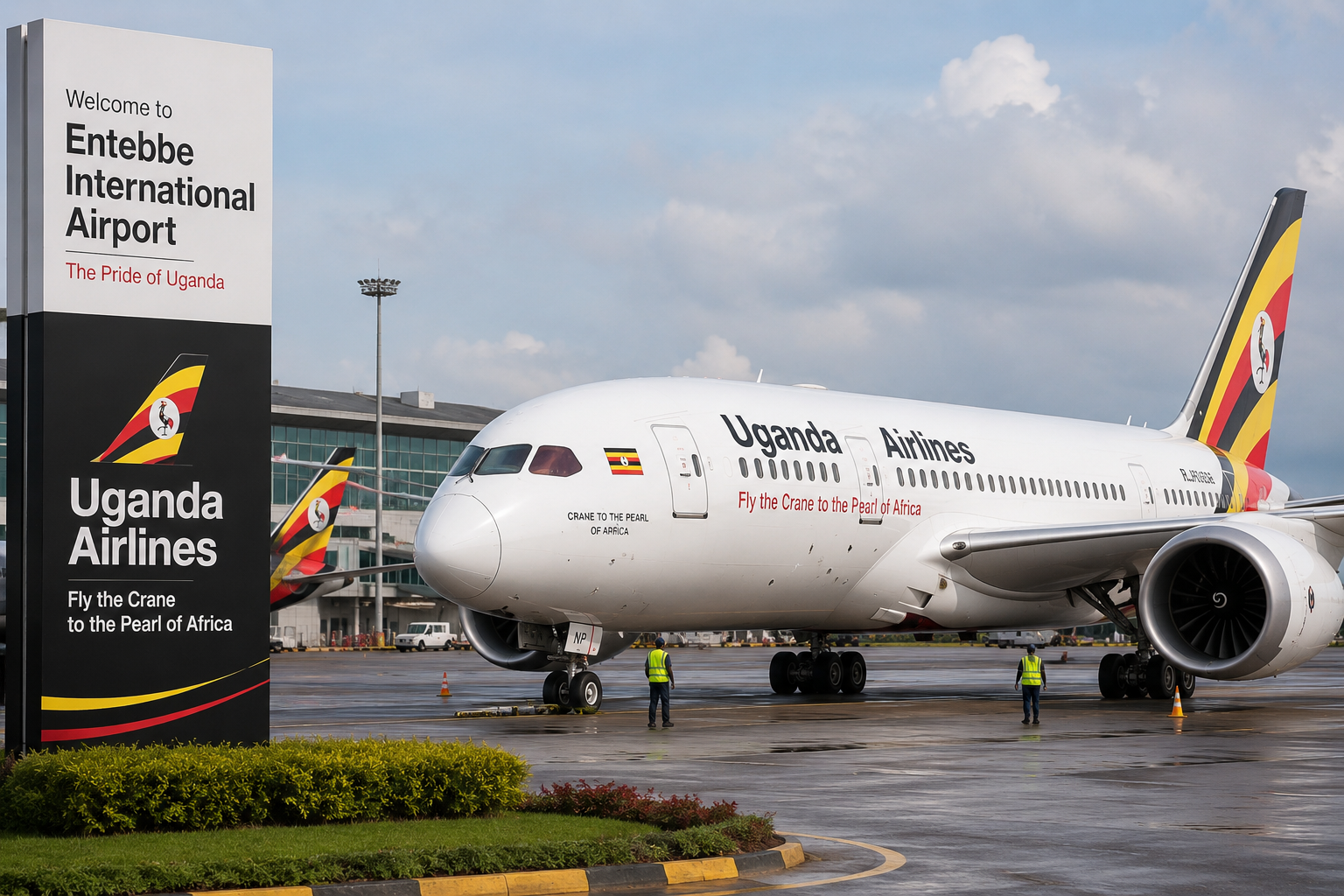
Uganda Airlines has set its sights on achieving financial break even by 2031 as the national carrier prepares to expand its operations with the delivery of new Boeing aircraft. The ambitious target reflects the airline’s long term growth strategy aimed at strengthening its regional and international network while improving operational efficiency and financial sustainability.
The state owned airline said the planned acquisition of additional Boeing aircraft will play a key role in expanding its route network, increasing passenger capacity and enhancing cargo services. The fleet expansion is expected to position the carrier to compete more effectively within Africa and on selected long haul international routes.
According to airline officials, the new aircraft will support efforts to meet growing demand for air travel while improving connectivity between Uganda and major global markets. The expansion is also expected to boost tourism, facilitate trade and strengthen the country’s position as an emerging aviation hub in East Africa.
Uganda Airlines has been steadily rebuilding its operations since its revival in 2019 after nearly two decades of inactivity. Since resuming commercial flights, the carrier has expanded its destinations across Africa while introducing long haul services to support business travel and international commerce.
The airline acknowledged that achieving profitability remains a long term objective, particularly in an industry that continues to face challenges such as high operating costs, fluctuating fuel prices, aircraft maintenance expenses and intense competition from established regional and international carriers.
Management expressed confidence that continued investment in fleet modernisation, improved operational efficiency and strategic route planning will help the airline gradually improve its financial performance over the coming years. Increasing passenger numbers, higher cargo volumes and stronger revenue generation are expected to contribute significantly toward achieving the 2031 break even target.
Aviation analysts noted that acquiring additional Boeing aircraft could provide the airline with greater operational flexibility and improved fuel efficiency, enabling it to serve more destinations while reducing unit operating costs. Modern aircraft also tend to enhance passenger comfort, improve reliability and strengthen an airline’s competitive position.
Industry experts believe Uganda Airlines’ expansion plans align with the broader growth of Africa’s aviation sector, where rising incomes, expanding trade and increasing tourism continue to drive demand for air transport services. They added that improved connectivity could stimulate investment, facilitate regional integration and support economic development across East Africa.
However, analysts cautioned that achieving financial sustainability will depend on disciplined cost management, consistent passenger demand and effective commercial strategies. They also highlighted the importance of maintaining high service standards and adapting to changing market conditions as competition within the aviation industry intensifies.
The airline’s investment strategy is expected to generate wider economic benefits beyond the aviation sector. Increased flight connectivity could boost tourism, create employment opportunities, encourage foreign investment and improve the movement of goods across regional and international markets.
As Uganda Airlines prepares for the arrival of its new Boeing aircraft, the carrier remains optimistic that sustained expansion, operational improvements and strategic investments will place it on a path toward financial stability. If its growth plans are successfully implemented, the airline hopes to achieve break even by 2031 while strengthening its contribution to Uganda’s economy and the wider East African aviation industry.











Leave a comment