


By Benson Daniel
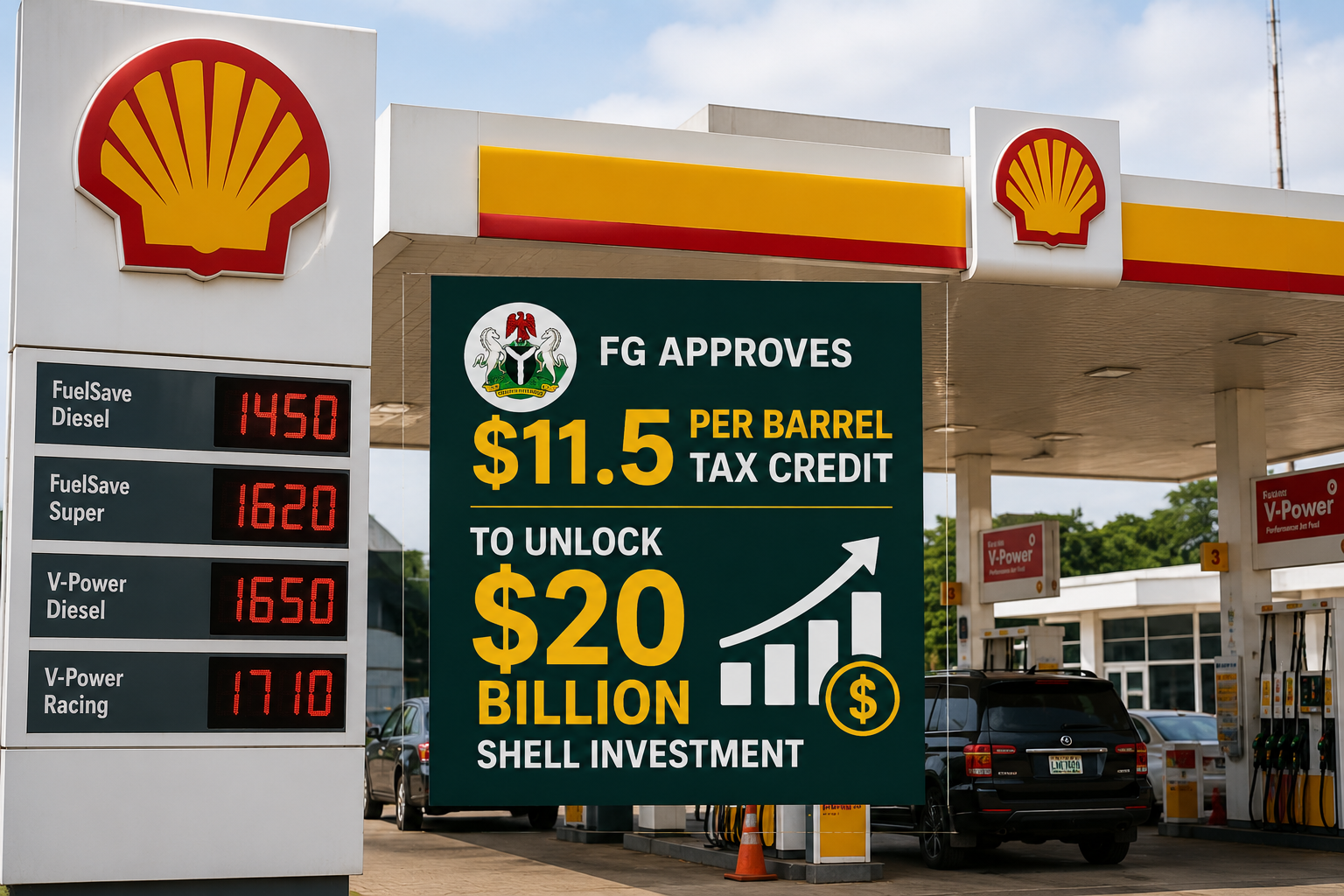
The Federal Government has approved a tax credit of $11.5 per barrel for Shell as part of a broader strategy to stimulate fresh investment in Nigeria’s oil and gas sector. The incentive is expected to unlock an estimated $20 billion in new capital spending, strengthening crude oil production and supporting long-term growth in the country’s energy industry.
The tax relief forms part of ongoing efforts to improve Nigeria’s investment climate by making upstream petroleum projects more commercially viable. Industry stakeholders believe the incentive will encourage accelerated development of key oil assets, particularly deepwater fields that require substantial capital and advanced technology.
The planned investment is expected to boost exploration, field development and production activities while creating employment opportunities and expanding opportunities for local contractors and service providers. Increased investment could also enhance Nigeria’s crude oil output, improve export earnings and strengthen government revenue over the medium term.
Energy analysts say fiscal incentives remain a critical tool for attracting international oil companies, especially as global competition for energy investment continues to intensify. They note that predictable policies and competitive tax frameworks are increasingly important in securing long-term investments in large-scale petroleum projects.
The development aligns with the Federal Government’s broader objective of increasing oil production, improving foreign exchange inflows and sustaining economic growth through strategic partnerships with global energy companies. Officials believe renewed investment in the upstream sector will contribute to greater energy security while supporting the implementation of reforms introduced under the Petroleum Industry Act.
Industry observers have welcomed the move, describing it as a positive signal to investors seeking policy stability in Nigeria’s energy sector. They, however, stressed the importance of maintaining transparent regulatory processes and consistent fiscal policies to ensure the expected investments translate into increased production, higher government revenues and broader economic benefits.











Leave a comment