


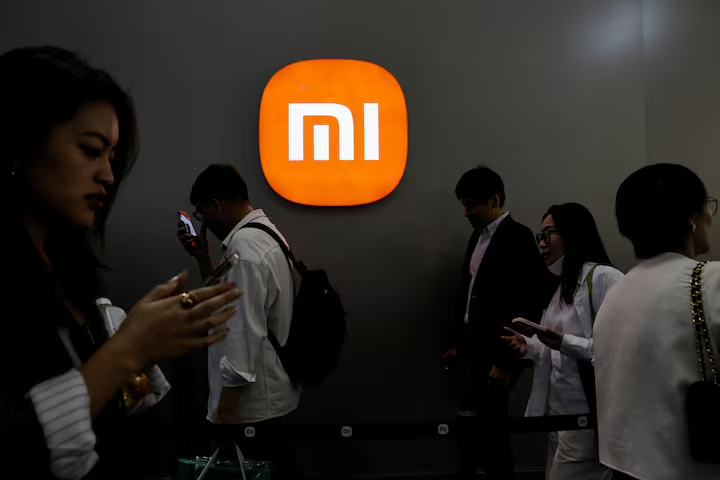
China’s Xiaomi Corporation reported a 57% decline in third-quarter net profit, missing analysts’ expectations as weaker electric vehicle deliveries and falling smartphone revenue weighed on its financial performance.
The Hong Kong-listed technology company recorded an adjusted net profit of 4.9 billion yuan ($735.65 million) for the July-to-September period, below the average analyst estimate of 5.2 billion yuan, according to LSEG data.
Xiaomi’s shares closed down 3.7% at HK$26.50 following the announcement.
EV Business Faces Growing Challenges
Xiaomi’s electric vehicle (EV), artificial intelligence and other new business segments recorded an operating loss of 3.4 billion yuan during the quarter.
Revenue from its electric vehicle business fell 19.9% to 22.7 billion yuan, mainly due to lower vehicle deliveries.
The company is also facing increasing competition and price pressure in China’s automotive market. Although sales of its recently launched SkyNomad SUV series have provided some support, they have not fully offset declining deliveries of older models.
Smartphone Business Under Pressure
Xiaomi’s total third-quarter revenue declined 5.2% year-on-year to 107.2 billion yuan, reflecting weaker performance in its smartphone business.
The company’s smartphone gross margin dropped to 9.2%, compared with 11.1% in the same period last year, as high memory costs continued to affect profitability.
Research firm Counterpoint reported that Xiaomi experienced a shipment decline of more than 30% during the quarter, reducing its global smartphone market share to 12%.
Despite the challenges, Xiaomi said its average smartphone selling prices increased by 10% compared with the previous quarter.
Company Shifts Focus to Premium Products
To improve its market position, Xiaomi has reduced its exposure to lower-priced smartphone segments and selected overseas markets, focusing instead on premium devices.
In September, the company introduced a new flagship foldable smartphone as it seeks to compete more directly with major rivals, including Apple and Samsung.
The latest results highlight the challenges facing Xiaomi as it works to strengthen its electric vehicle and smartphone businesses amid rising costs, weaker demand and intensifying competition.
The company’s ability to improve vehicle deliveries and protect smartphone profit margins will remain important to its financial performance in the coming quarters.











Leave a comment