


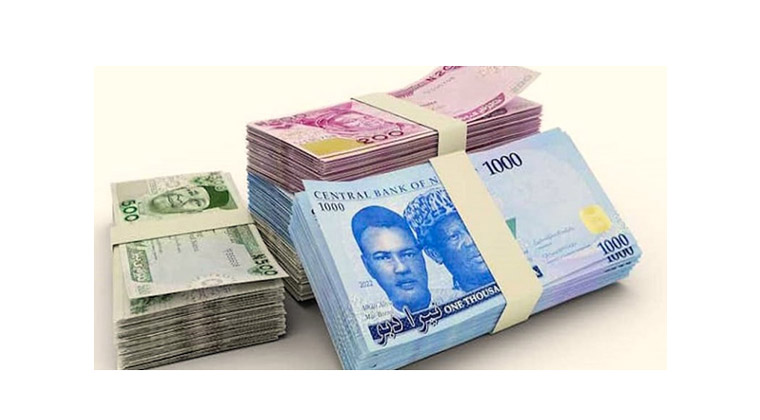
The naira is facing renewed pressure as increased political spending ahead of the 2027 general elections coincides with rising demand for foreign exchange during the Christmas season.
The Nigerian currency depreciated to N1,394 per dollar at the official foreign exchange market on Friday, while it exchanged at approximately N1,460 per dollar at the parallel market on Sunday, reflecting growing pressure on the local currency.
The development comes as political activities intensify across the country, with political parties and potential candidates beginning preparations for the 2027 general elections.
Financial market participants and economic analysts have identified election-related spending, festive-season demand for dollars, capital flight and reduced foreign exchange inflows as factors contributing to the pressure on the naira.
At the parallel market, the dollar reportedly exchanged at N1,440 on Thursday, compared with N1,375 a month earlier, indicating an increase in demand for foreign currency.
Some currency traders attributed the development partly to increased purchases by individuals and businesses preparing for the Christmas celebrations.
A parallel market trader in Abuja, Haruna Ibrahim, disclosed that some customers had been purchasing dollars on behalf of politicians preparing for the forthcoming elections.
He explained that some individuals visiting currency markets claimed they had been sent by political figures to obtain foreign exchange.
Another Bureau de Change trader in Lagos, identified simply as Ahmed, said operators in the market had observed increased demand associated with political activities.
According to him, some political actors were purchasing foreign currencies ahead of the election season, contributing to pressure in the informal foreign exchange market.
The Chief Executive Officer of the Centre for the Promotion of Private Enterprise, Dr Muda Yusuf, said domestic economic factors could be contributing to the continued depreciation of the naira.
Yusuf identified political spending, capital flight and policy uncertainty as some of the factors affecting foreign exchange stability.
He explained that increased political spending could inject additional liquidity into the economy, potentially creating further demand for foreign currencies.
He also noted that some election-related transactions could take place through the parallel market, particularly where individuals prefer cash-based transactions.
The economist warned that uncertainty surrounding economic policies could also encourage investors to move their funds outside the country.
Meanwhile, emerging markets expert and economist Ike Ibeabuchi attributed the weakening currency partly to declining foreign exchange inflows and increasing demand for dollars.
He explained that reduced inflows from exporters, investors and other sources could limit the availability of foreign currencies, while demand for imports and international transactions continued to increase.
The approaching Christmas celebrations have also contributed to the pressure.
During the festive season, Nigerians typically require additional foreign exchange for international travel, overseas purchases, school fees, medical expenses and other international payments.
These activities can increase demand for dollars at a time when political spending is also expected to rise.
The country’s foreign reserves also recorded a decline, standing at $54.65bn on Friday, compared with $54.713bn recorded on Thursday.
Although the reserves remain an important source of foreign exchange support, continued pressure on dollar supply could complicate efforts to maintain exchange rate stability.
The combination of election-related spending, festive demand and limited foreign exchange inflows has therefore raised concerns about the naira’s performance in the coming months.
As Nigeria approaches the 2027 general elections, economists say developments in the foreign exchange market will remain closely linked to political activities, investor confidence, monetary policy and the country’s ability to attract foreign currency inflows.











Leave a comment