


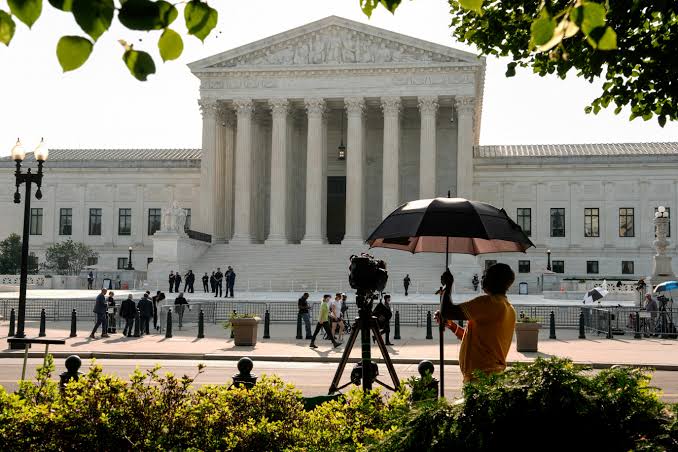
The US Supreme Court has agreed to hear the Trump administration’s appeal seeking to deny asylum to Nigerian citizen Izuchukwu Ozurumba, whose work cooking for an armed group in Nigeria led US immigration officials to classify him as having supported terrorism.
The case could influence how American immigration law defines “material support” for terrorism, particularly when individuals claim they were forced to work for organisations accused of terrorist activity.
The Justice Department is challenging a lower court ruling that found Ozurumba’s cooking for a group known as the Unknown Gunmen did not amount to material support for terrorism. The Supreme Court is expected to hear arguments and issue a decision by the end of June.
According to court documents, Ozurumba travelled to a remote camp outside Lagos in 2022 after receiving a job offer. He later discovered that the camp was operated by the Unknown Gunmen, a group US officials considered a terrorist organisation and court documents linked to Nigerian separatists.
His lawyers said Ozurumba became suspicious after noticing that the group’s movements coincided with reports of killings and arson. They said he tried to leave but was held against his will and forced to work without pay.
After about six months, he escaped while accompanying members of the group on a supply trip. His lawyers said he subsequently faced beatings and death threats, forcing him to flee to Venezuela before travelling to the US southern border, where he entered the country in July 2023.
An immigration judge during former President Joe Biden’s administration ruled that preparing meals helped the group meet its basic needs and therefore constituted material support, even if Ozurumba had acted under duress. The judge denied him protection from deportation.
Ozurumba was deported to Nigeria in 2025 while his legal challenge continued.
In September 2025, the 4th US Circuit Court of Appeals ruled in his favour, describing him as a captive labourer and finding that his cooking did not provide resources the group could readily use to plan or carry out attacks. However, the court did not order his return to the United States while the case proceeded.
The Justice Department has argued that allowing the ruling to stand would make it harder for the government to exclude non citizens with links to terrorist organisations. It maintains that providing meals to members of such a group can constitute material support, similar to supplying fuel for its vehicles.











Leave a comment