


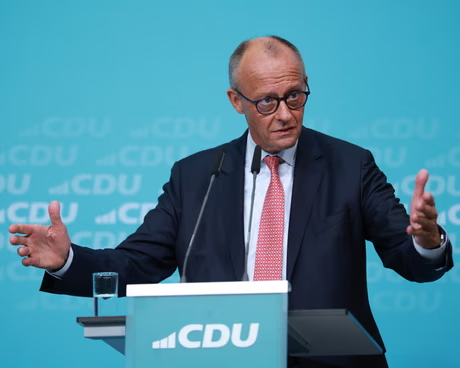
The elections come just two weeks after the far-right Alternative for Germany (AfD) recorded its strongest-ever result in a German regional election, winning about 44 per cent of the vote in Saxony-Anhalt.
That result dealt a heavy blow to Merz’s Christian Democratic Union (CDU), which finished far behind the AfD in the eastern state. The outcome has intensified debate within Germany over the strength of the chancellor’s leadership and the direction of the country’s politics.
Merz has been in office for about 16 months and had sought to strengthen the CDU while addressing concerns over Germany’s economic performance, migration and other domestic issues. The recent electoral setback, however, has created additional pressure on his government.
In Berlin, voters are choosing a new state parliament in an election closely watched because of the CDU’s position in the capital. In Mecklenburg-Western Pomerania, another eastern state, the AfD is also seeking to expand its support.
The AfD’s advance has become one of the most significant developments in German politics in recent years. The party has campaigned strongly on immigration and has criticised the established political parties over the economy, energy policy and other issues.
Its gains have also raised questions about Germany’s longstanding refusal by the mainstream parties to form governing coalitions with the AfD.
For Merz, the state elections carry significance beyond the two regions because the results could influence confidence within his own party. A poor performance by the CDU could fuel further criticism from members who are already concerned about the government’s ability to deliver on its programme.
The chancellor has nevertheless insisted that he intends to continue in office and pursue his government’s agenda.
The political uncertainty comes as Germany, Europe’s largest economy, continues to deal with weak growth, industrial pressures and debates over how to restore competitiveness.
The outcome of the elections will therefore be closely watched not only for their effect on regional governments but also for what they could mean for the stability of Germany’s federal government.
The AfD’s rise has added another layer to the challenge facing Germany’s established parties, particularly in the country’s eastern states, where the party has made some of its strongest electoral gains.
As voting takes place, the results in Berlin and Mecklenburg-Western Pomerania will provide another indication of the changing political landscape and the level of support for Merz’s CDU and the AfD.
For the chancellor, the immediate focus will be on the electoral performance of his party and whether the results intensify calls for changes within the CDU or leave him with enough political authority to continue his programme.











Leave a comment