


By Benson Daniel
Climate change likely contributed to the weakening of a Himalayan glacier that collapsed in August and triggered catastrophic flooding across parts of Nepal and Tibet, according to a new scientific assessment.
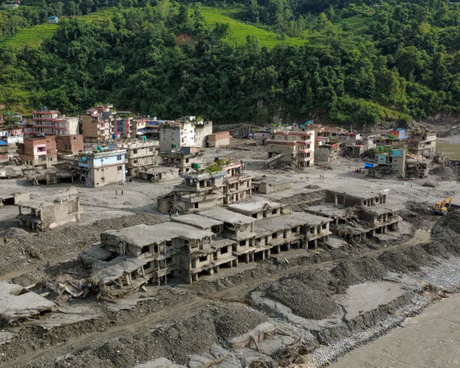
Researchers found that decades of warming had altered conditions around the Langtang Lirung mountain, where a massive rock-and-ice collapse occurred on August 26. The disaster sent an enormous volume of ice, rock and water down the mountain, producing powerful floods that devastated communities and infrastructure downstream.
The assessment by researchers associated with the World Weather Attribution group identified several climate-related factors that may have made the mountain slope increasingly unstable. These included glacier thinning, thawing permafrost and increased meltwater resulting from unusually high temperatures.
The Himalayan region experienced exceptionally high temperatures in the period leading up to the collapse. Researchers said regional temperatures had risen by about 2°C since pre-industrial times, while July and August 2026 were among the warmest periods recorded locally.
Scientists said increased warming can weaken the natural ice and frozen ground that help hold steep mountain slopes together. As glaciers retreat and permafrost thaws, previously stable rock surfaces can become exposed and more vulnerable to collapse.

Unusually heavy snowfall in October and November 2025 also contributed to the amount of snow and ice available to melt when temperatures subsequently increased, potentially adding to the instability of the affected area.
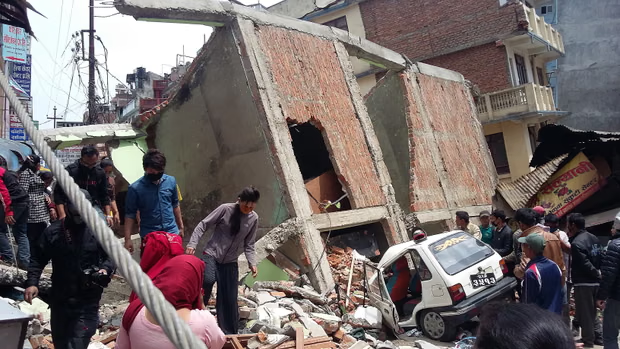
However, the study does not attribute the disaster entirely to climate change. Researchers also pointed to geological factors, including the possible continuing effects of Nepal’s 2015 earthquake, which may have weakened the mountain structure.
The August disaster has caused enormous loss of life and widespread damage. More than 1,300 deaths had been confirmed by September 17, while thousands of people remained missing. The floods also destroyed infrastructure, including hydropower facilities, placing additional pressure on Nepal’s electricity system.
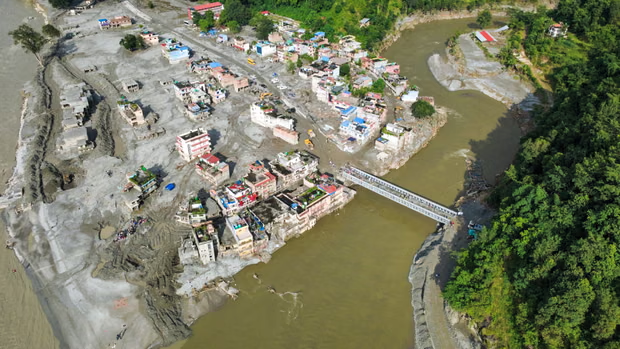
The findings have renewed concerns about the growing risks faced by communities living below unstable glaciers and high-altitude mountain slopes. Scientists warn that continued warming could increase the likelihood of similar events in vulnerable parts of the Himalayas.
The disaster also highlights the economic consequences of climate-related hazards. Damage to roads, bridges, homes and power infrastructure can impose significant reconstruction costs, while disruptions to electricity generation and transportation can affect businesses and livelihoods.
For Nepal, which relies heavily on hydropower, the destruction of several power facilities has added another layer to the crisis. India has already approved temporary electricity exports to Nepal to help compensate for the loss of domestic generating capacity following the disaster.
Scientists say improved monitoring of glaciers, mountain slopes and permafrost could help identify dangerous conditions earlier. But they also stress that reducing the underlying risks associated with global warming remains important as Himalayan communities face an increasingly unstable mountain environment.











Leave a comment