


By Benson Daniel
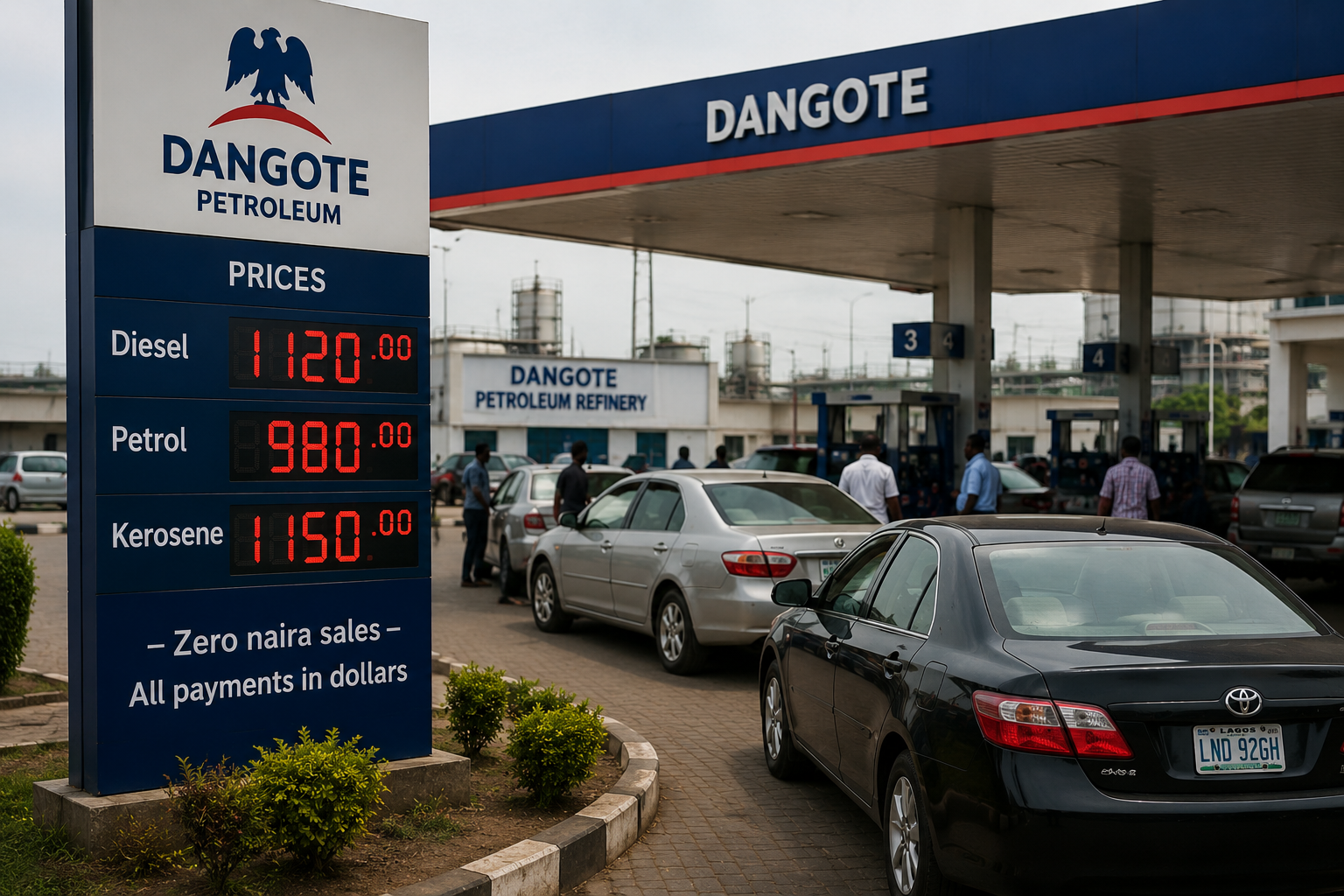
The price of Premium Motor Spirit (PMS), popularly known as petrol, has surged by as much as ₦113 per litre across several parts of Nigeria following Dangote Petroleum Refinery’s decision to discontinue the sale of fuel in naira. The development has triggered immediate adjustments in pump prices by marketers, raising fresh concerns over transportation costs and inflation.
Checks across major filling stations indicate that petrol, which previously sold for between ₦870 and ₦890 per litre in many locations, is now being dispensed at prices ranging from ₦980 to above ₦1,000 per litre, depending on the outlet and location. Industry players attribute the increase to the refinery’s shift to dollar-denominated transactions, which has significantly raised the landing cost of the product for marketers.
The refinery had earlier introduced naira-based sales as part of efforts to ease pressure on the foreign exchange market and improve domestic fuel supply. However, the company recently announced a return to dollar pricing, citing the need to align its operations with prevailing market realities and foreign exchange obligations.
Energy analysts say the latest increase is expected to ripple across the economy, with higher transportation fares, increased production costs and rising prices of goods and services likely in the coming weeks. Businesses that rely heavily on fuel for logistics and power generation are also expected to face additional operating costs.
While stakeholders acknowledge that the move reflects prevailing foreign exchange dynamics, they have urged the government to accelerate policies that will strengthen the naira, boost local refining capacity and stabilise the downstream petroleum sector. Many Nigerians now fear the latest fuel price increase could further erode household purchasing power and place additional pressure on businesses already grappling with a challenging economic environment.










Leave a comment