


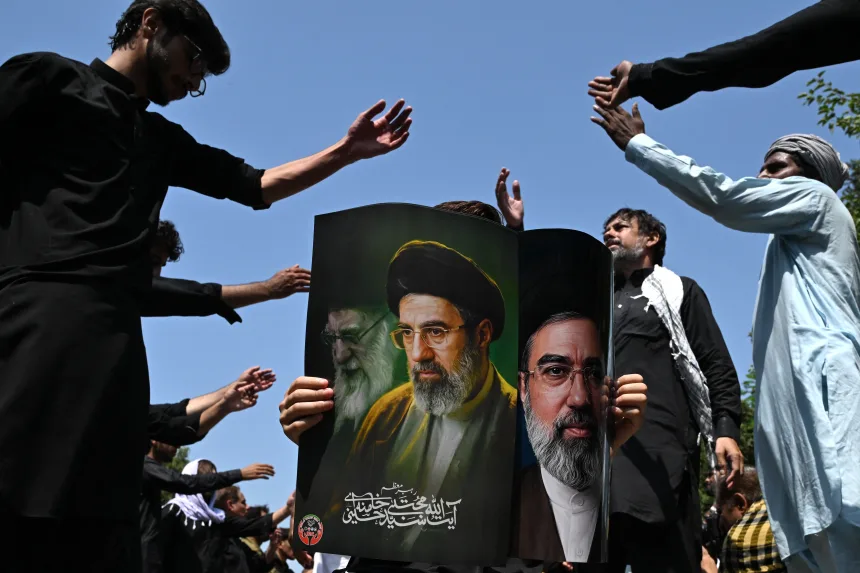
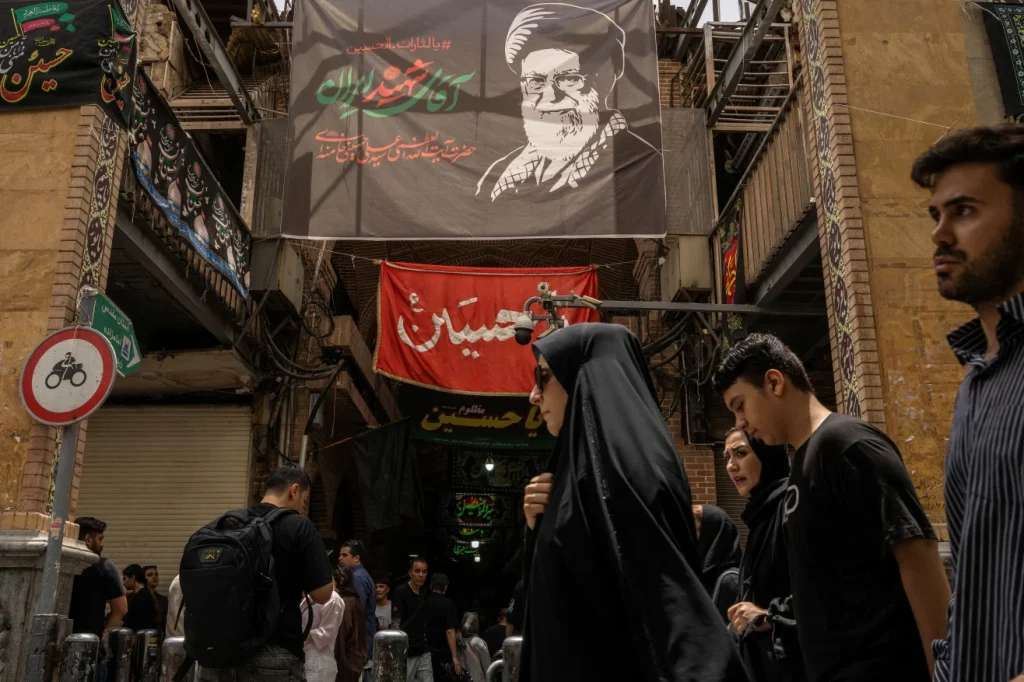
TEHRAN, Iran Iran has launched an unprecedented week long state funeral for slain Supreme Leader Ali Khamenei, turning the ceremony into a powerful display of national unity, religious symbolism, and political defiance directed at the United States and Israel.
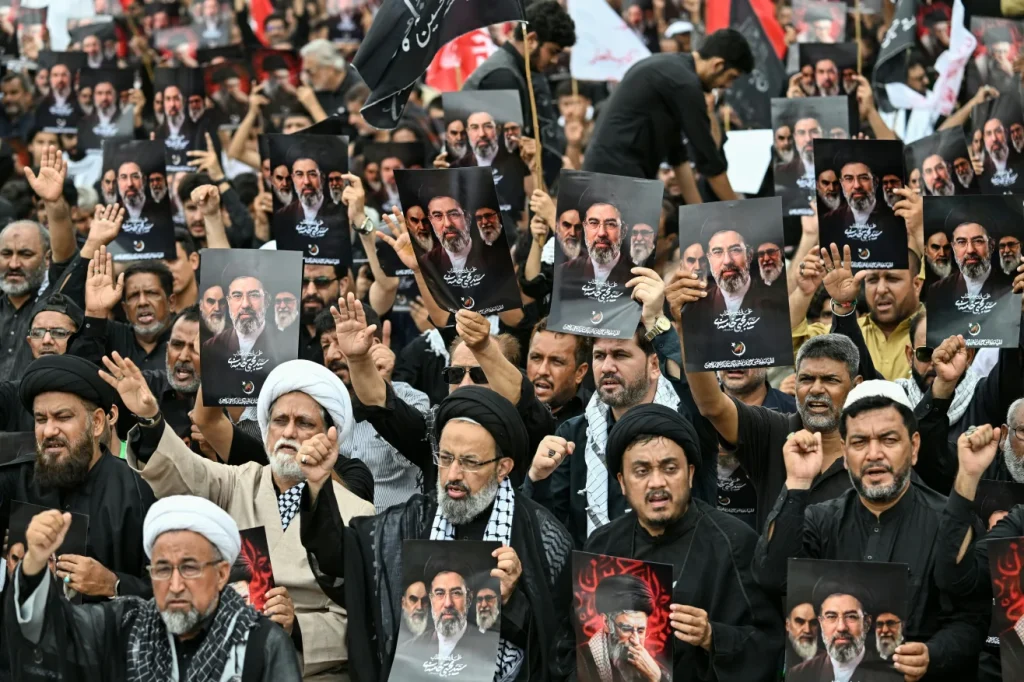
Four months after Khamenei was killed at the beginning of the US-Israeli war on Iran, millions of mourners are expected to participate in funeral processions spanning five cities across Iran and Iraq. Despite the heavy economic burden caused by years of sanctions and the recent conflict, Iranian authorities have spared no effort in organizing one of the largest public events in the country’s history.
The elaborate funeral coincides with the Islamic month of Muharram a sacred period of mourning in Shiite Islam and overlaps with the United States’ 250th Independence Day celebrations, a timing widely seen as symbolic. Iranian officials have portrayed the ceremonies as a message that the Islamic Republic remains resilient despite the assassination of its longtime leader.
Authorities have mobilized government agencies, universities, labor unions, emergency services, the military, and thousands of volunteers to coordinate the massive event. Officials in both Iran and neighboring Iraq expect millions of pilgrims to visit holy sites and cities connected to the funeral procession.
For more than a week, Iranian state media have focused almost exclusively on honoring Khamenei, replacing coverage of diplomatic negotiations with the United States with documentaries, tribute programs, and patriotic songs celebrating his legacy.
Parliament Speaker Mohammad Bagher Ghalibaf described the funeral as an opportunity to demonstrate Iran’s determination to the international community.
“We must rise and raise the cry for the nation’s blood to the world so that the world knows that the honorable and noble nation of Iran does not remain silent in the face of oppression,” Ghalibaf wrote in a message published by Iranian state media.
The funeral also comes amid growing speculation surrounding Iran’s new Supreme Leader, Mojtaba Khamenei, the late leader’s son. Mojtaba has remained out of public view since surviving the attack that killed his father and other members of his family, leading to widespread speculation over whether he will make his first public appearance during the ceremonies.
Massive Security and Logistics Operation
The funeral represents one of the largest logistical operations ever undertaken by the Islamic Republic.
Khamenei’s body is lying in state at Tehran’s Imam Khomeini Mosalla, where authorities have installed thousands of cooling water sprinklers to protect mourners from the intense summer heat. Tehran’s airports have temporarily suspended operations, while extensive traffic restrictions have been imposed to accommodate the anticipated crowds.
Iranian officials say approximately 50 million pieces of bread will be baked to feed mourners, supported by 16 mobile bakeries operating across the capital.
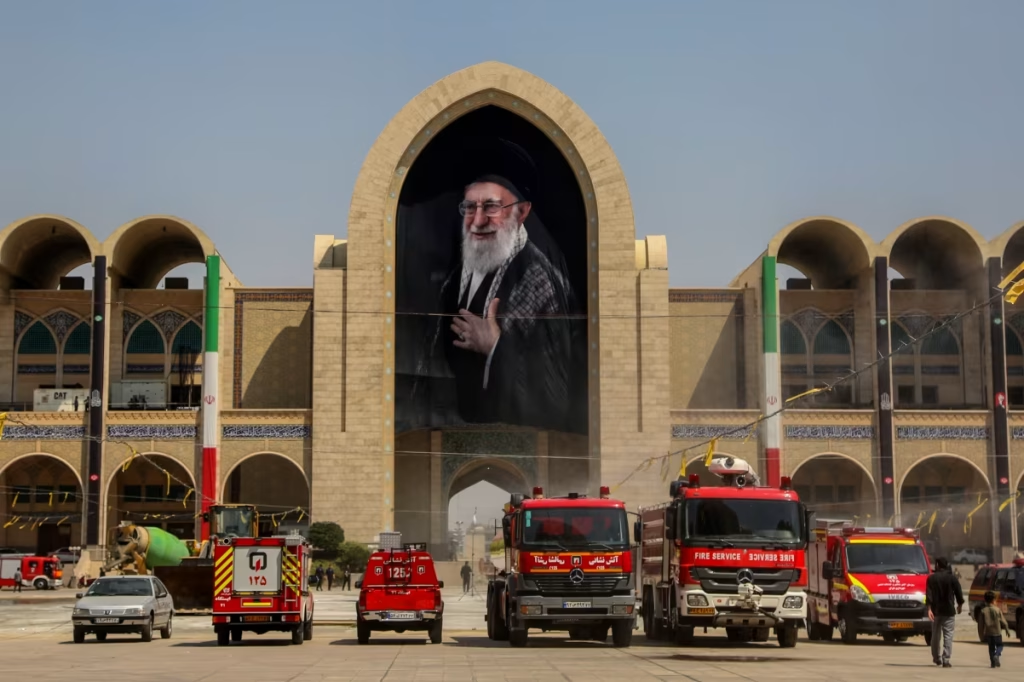
Emergency preparations include more than 2,500 ambulances, 21 helicopters, 100 drones, thousands of rescue workers, and dozens of hospitals placed on standby. Schools, mosques, sports halls, parks, and public buildings have also been converted into temporary accommodation for visitors arriving from across Iran and neighboring countries.
A Funeral Designed to Project Power
Following ceremonies in Tehran, Khamenei’s body will be transported to the holy city of Qom before continuing to the Shiite holy cities of Najaf and Karbala in Iraq. The procession will conclude with his burial at the Imam Reza shrine in Mashhad, his birthplace.
Analysts say taking the funeral beyond Iran’s borders reinforces Tehran’s long-standing ambition of presenting itself as the spiritual leader of Shiite communities throughout the region.
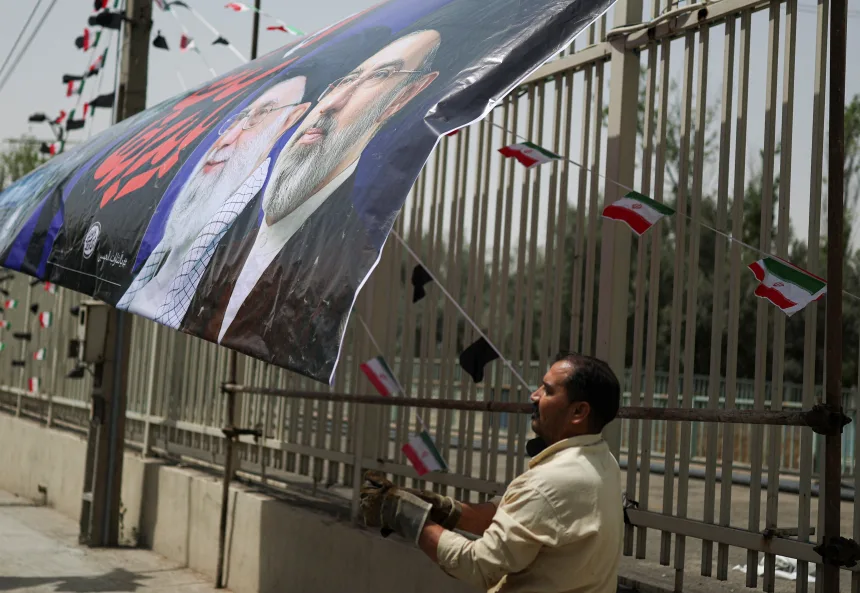
Sina Toossi, a senior fellow at the Center for International Policy, told CNN that Khamenei’s assassination has transformed him into a far more powerful symbol than he was during his lifetime.
“Khamenei is now being framed as a martyred religious authority, akin to revered Shia saints whose worldview was vindicated by the manner of their death,” Toossi said.
Iranian authorities estimate attendance could range from 4 million to 15 million people, potentially making it one of the largest funeral gatherings in modern history. Officials also say approximately 14,000 journalists, including hundreds of foreign reporters, have been accredited to cover the ceremonies.
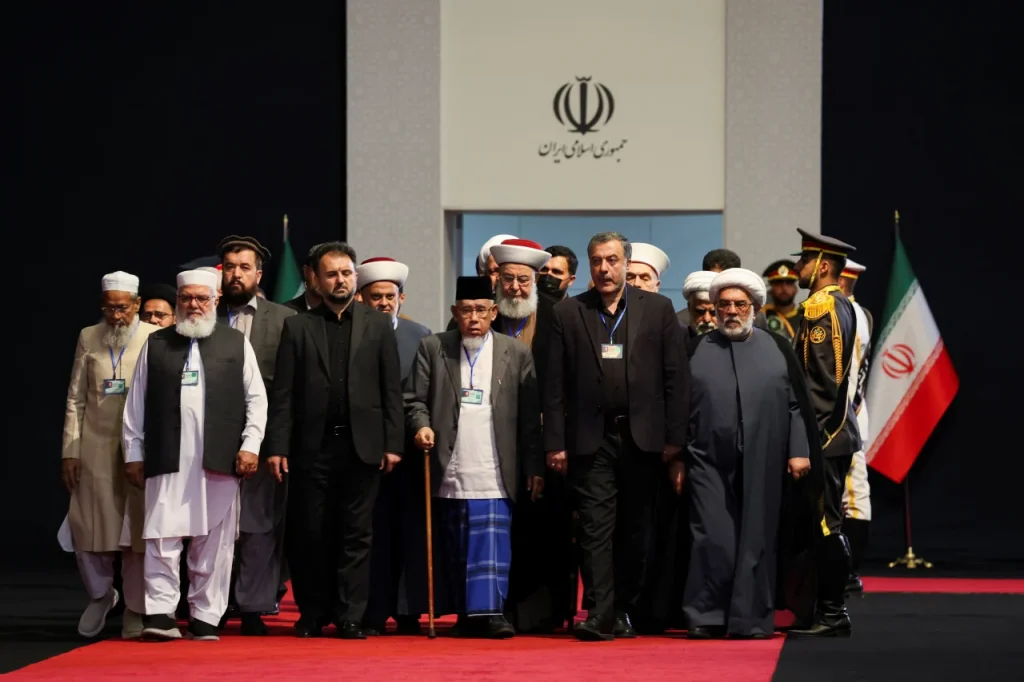
Several foreign dignitaries are expected to attend, including Georgian President Mikheil Kavelashvili, Pakistani Prime Minister Shehbaz Sharif, and Russian Security Council Deputy Chairman Dmitry Medvedev. However, Western governments have not been invited.
Mixed Reactions Among Iranians
While officials describe the funeral as a historic demonstration of national solidarity, reactions among ordinary Iranians appear mixed.
Some residents have expressed frustration over widespread traffic disruptions, fuel shortages, and public service interruptions caused by the massive event.
One Tehran resident told CNN that many people were more interested in leaving the city than attending the ceremonies.
“I haven’t even been able to get petrol for two days because the queues are insane,” the resident said. “And let’s be real, most people aren’t going to the funeral they’re going on holiday.”
The contrasting reactions highlight the divisions that continue to exist within Iran, where Khamenei was both revered by loyal supporters and fiercely opposed by many who blamed his decades long rule for political repression and economic hardship.
Source: CNN






Leave a comment