


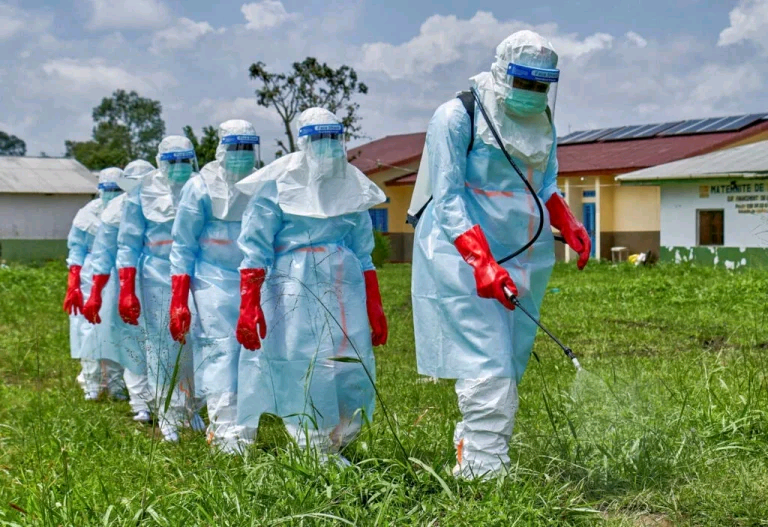
The Swiss government has rejected claims that the Ebola patient in Nigeria travelled to the Democratic Republic of Congo (DRC), adding a new complication to efforts to trace the source of the infection.
The woman, a Ugandan born Swiss national and wife of a Swiss diplomat based in Abuja, was reported by Swiss authorities to have travelled with her husband in Uganda before falling ill in Nigeria.
The Swiss Federal Department of Foreign Affairs told Reuters on Friday that the woman did not travel to the DRC. The statement contradicts accounts from Ugandan authorities, who said she had travelled to eastern Congo, where an Ebola outbreak was declared in May.
The disagreement comes as health authorities investigate how the woman contracted the virus and whether she may have been exposed to Ebola in Uganda, Kenya or the DRC.
The World Health Organization said its investigation into the likely source of the infection was continuing. WHO Ebola incident manager Catherine Smallwood said health officials in Congo had no information showing that the Nigerian patient had travelled there.
Smallwood said a possible link to Kenya was also being examined because the Nigerian patient and another person travelled from Uganda’s Entebbe airport on the same day. Investigators will need to compare their travel dates with the patient’s symptom timeline to determine where exposure was most likely to have occurred.
Nigeria confirmed an Ebola case in Abuja earlier this week, triggering contact tracing and increased surveillance at the country’s borders and other entry points.
The case has heightened regional concerns because Ebola infections have now been detected in four African countries, including the DRC, Uganda, Kenya and Nigeria, according to the Africa Centres for Disease Control and Prevention.
Uganda recorded 20 Ebola cases in May and June, most of them linked to infections imported from the DRC. The WHO declared Uganda free of Ebola in August after the outbreak was brought under control.
Ugandan government spokesperson Alan Kasujja previously told Reuters that Uganda had no active Ebola cases and said any new infections would be publicly reported.
The current investigation is particularly important because identifying the source of infection can help health authorities determine who may have been exposed and prevent further transmission.
Ebola spreads mainly through direct contact with the bodily fluids of infected people. Symptoms can include fever, vomiting and diarrhoea, while severe cases can result in bleeding and death.
The conflicting accounts over the patient’s movements underline the importance of accurate travel information and cooperation among African countries as authorities work to contain the latest outbreak.











Leave a comment